Guides
Guide
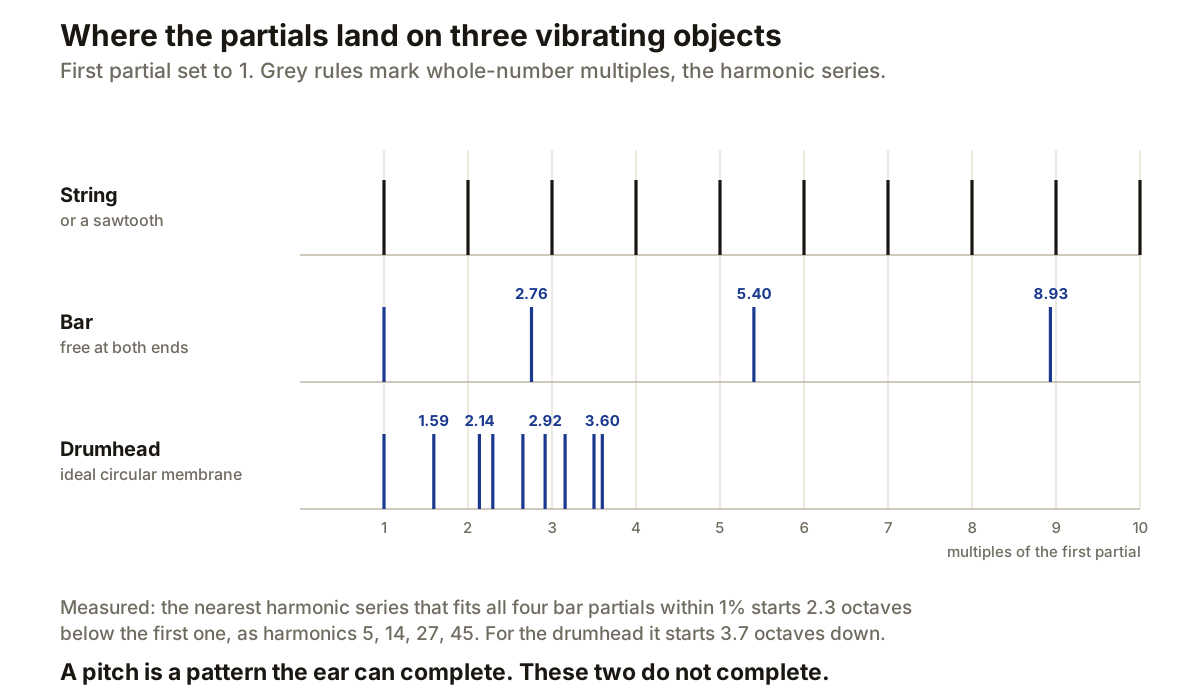
Inharmonic partials: why a bar or a drum has a less certain pitch than a string
Guide
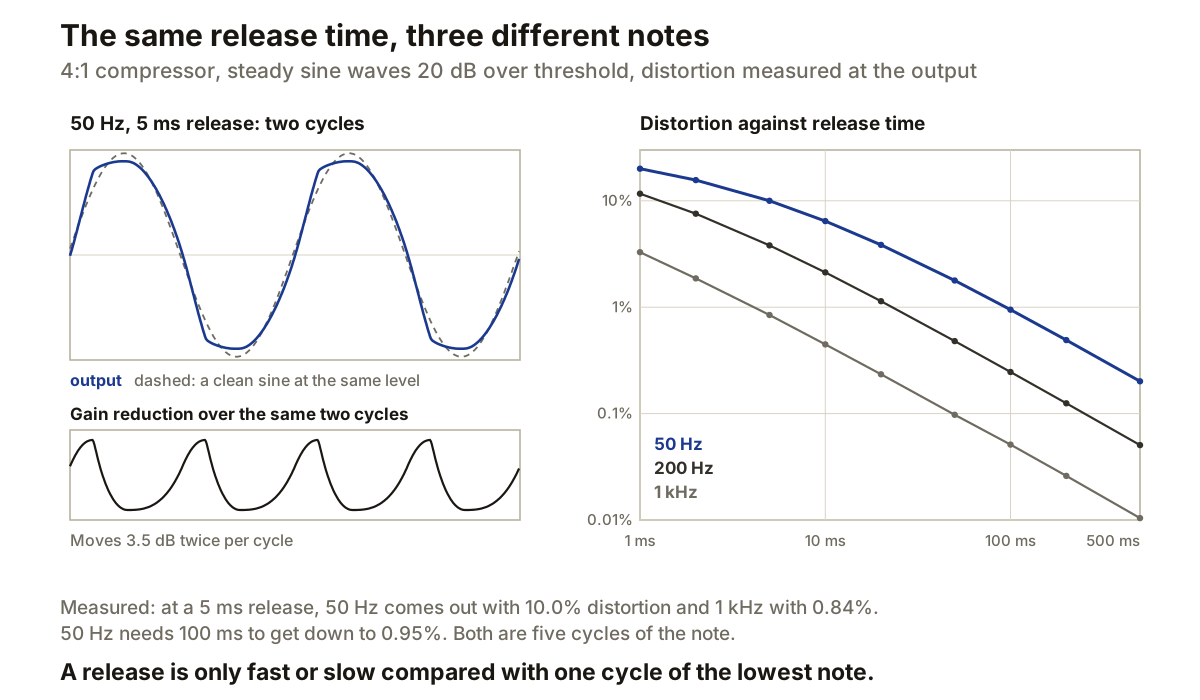
Release time: why the same fast release distorts the bass and leaves the mids clean
Guide
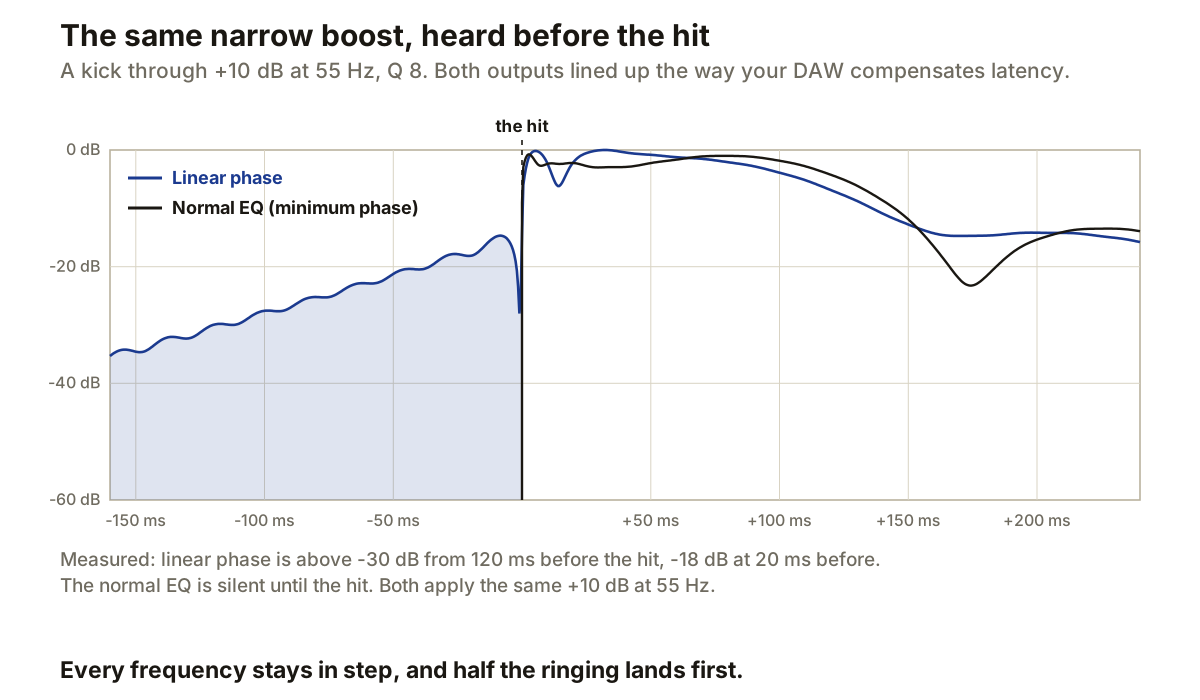
Linear-phase EQ: what the latency buys, and why the ringing moves in front of the note
Guide
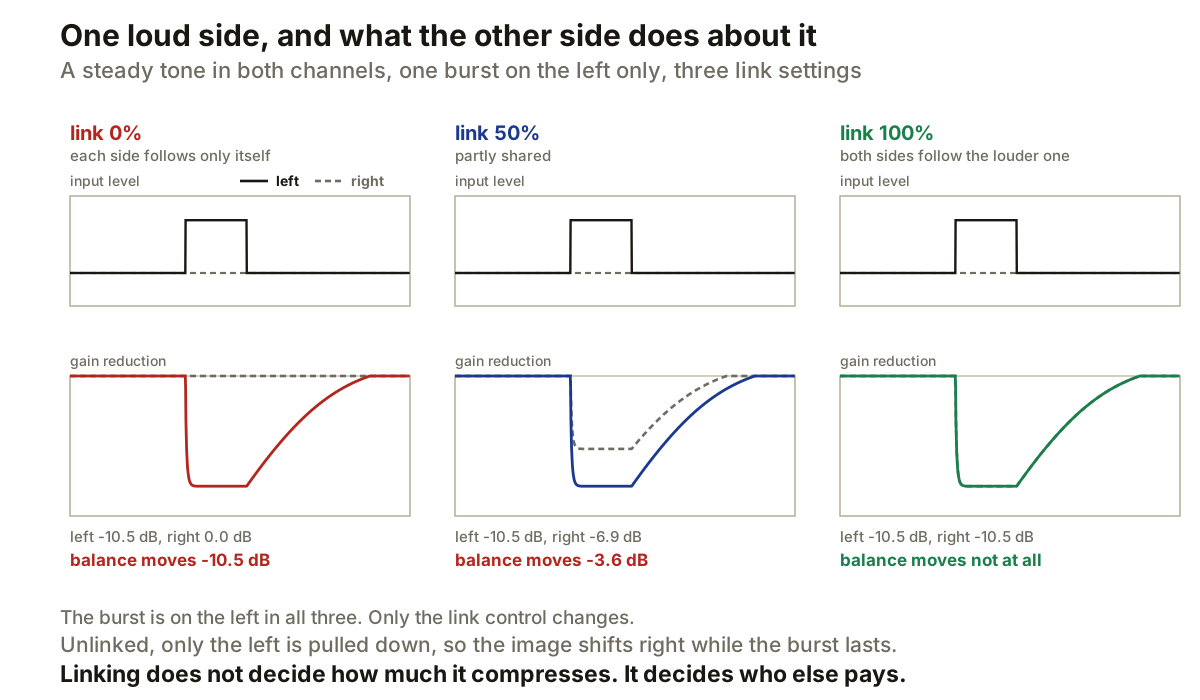
Stereo linking: the control that decides which channel pays
Guide
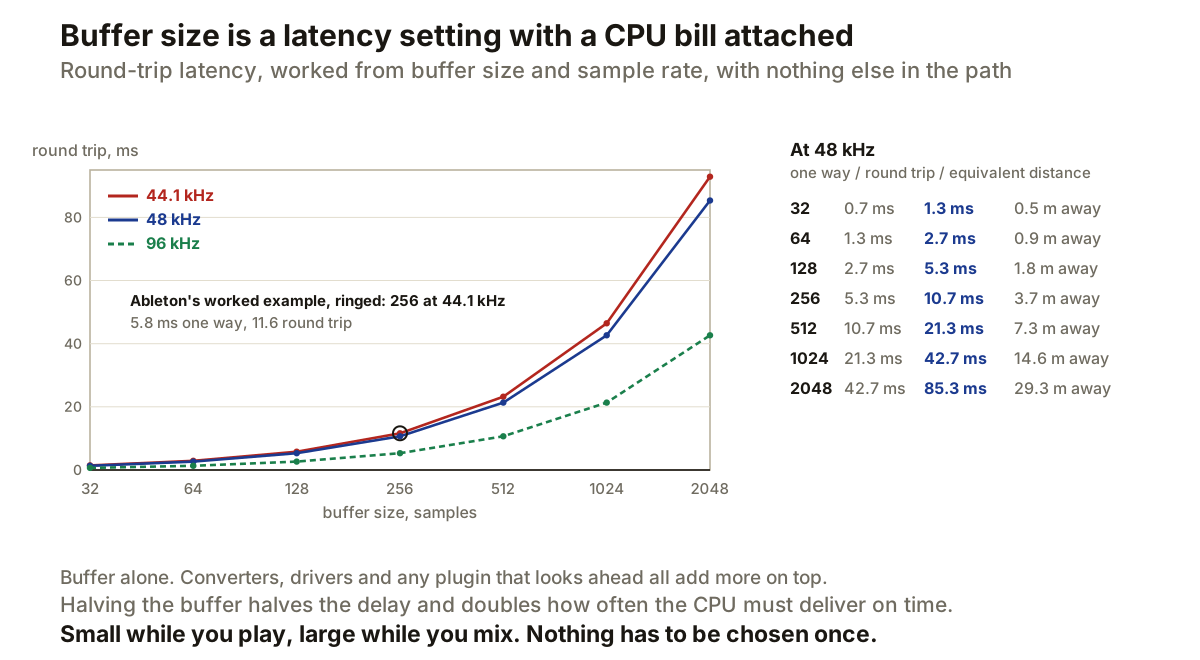
Buffer size: the one setting you are supposed to change twice a session
Guide
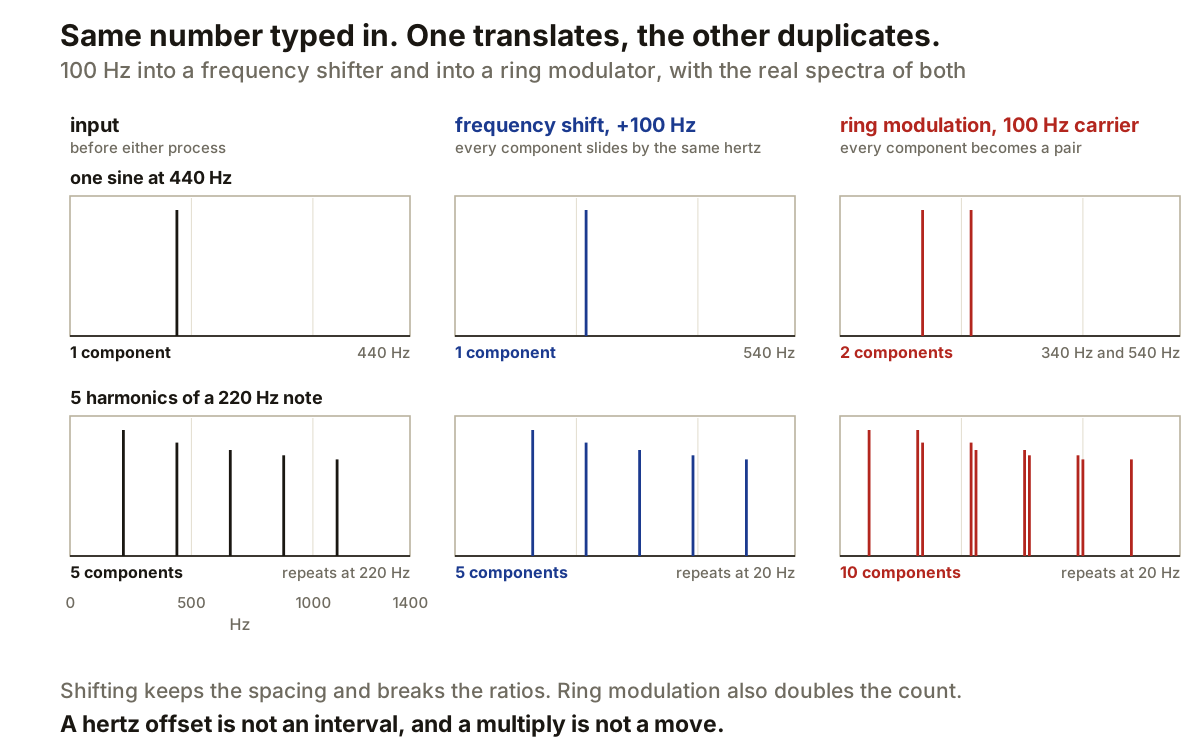
Ring modulation and frequency shifting: same number, different spectrum
Guide
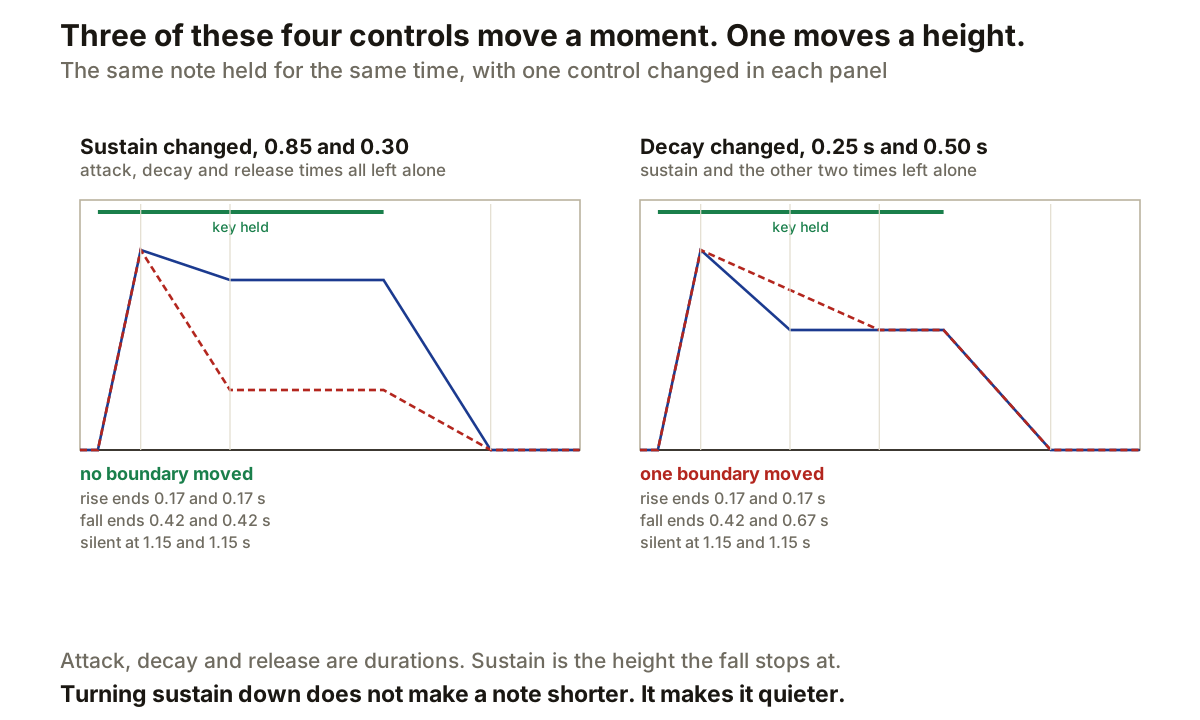
ADSR: three of the four controls are times and one is not
Guide
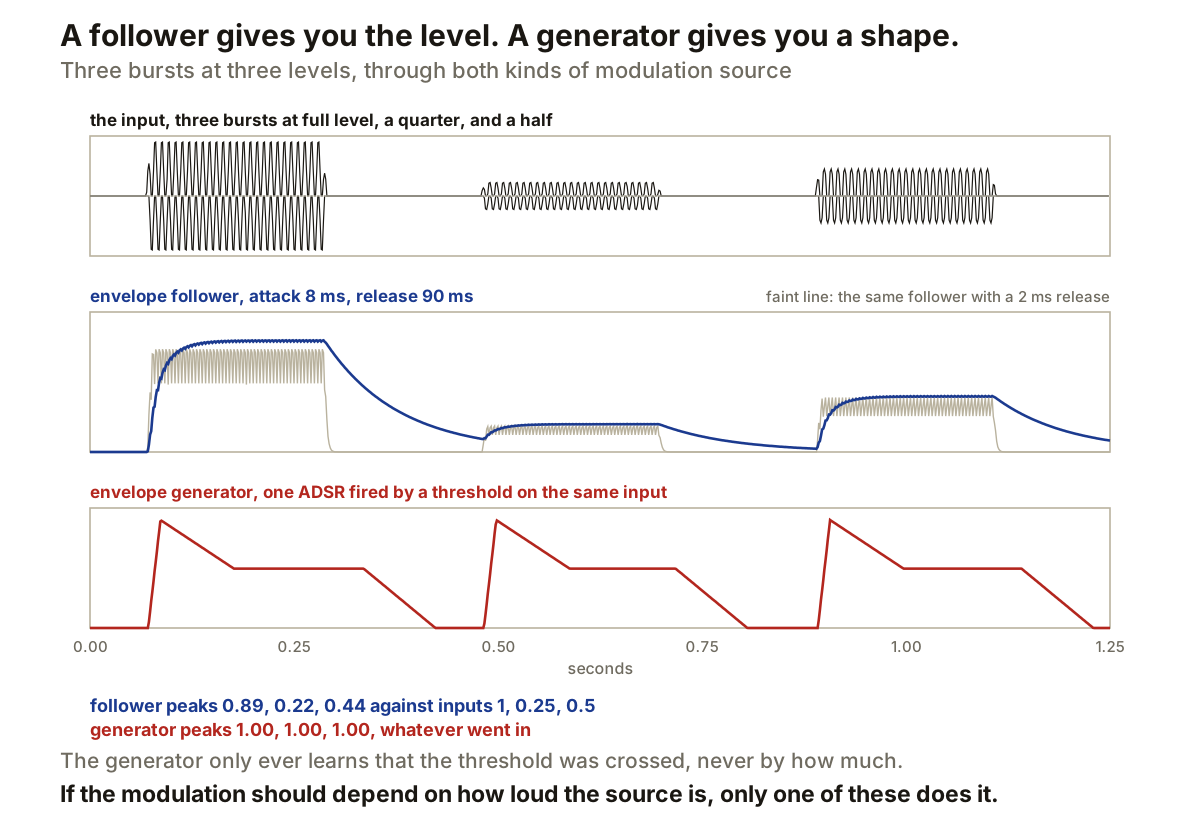
Envelope followers: the modulation source that has no shape of its own
Guide
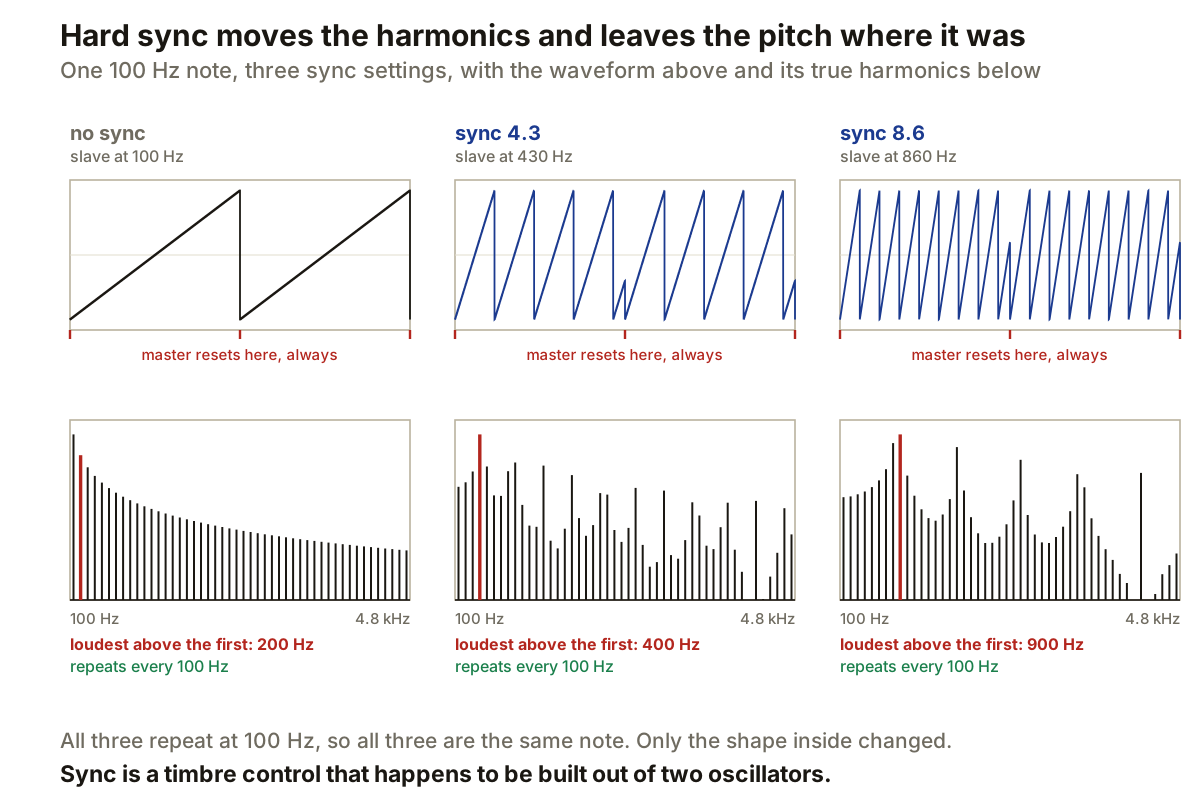
Hard sync: why it changes the harmonics without changing the note
Guide
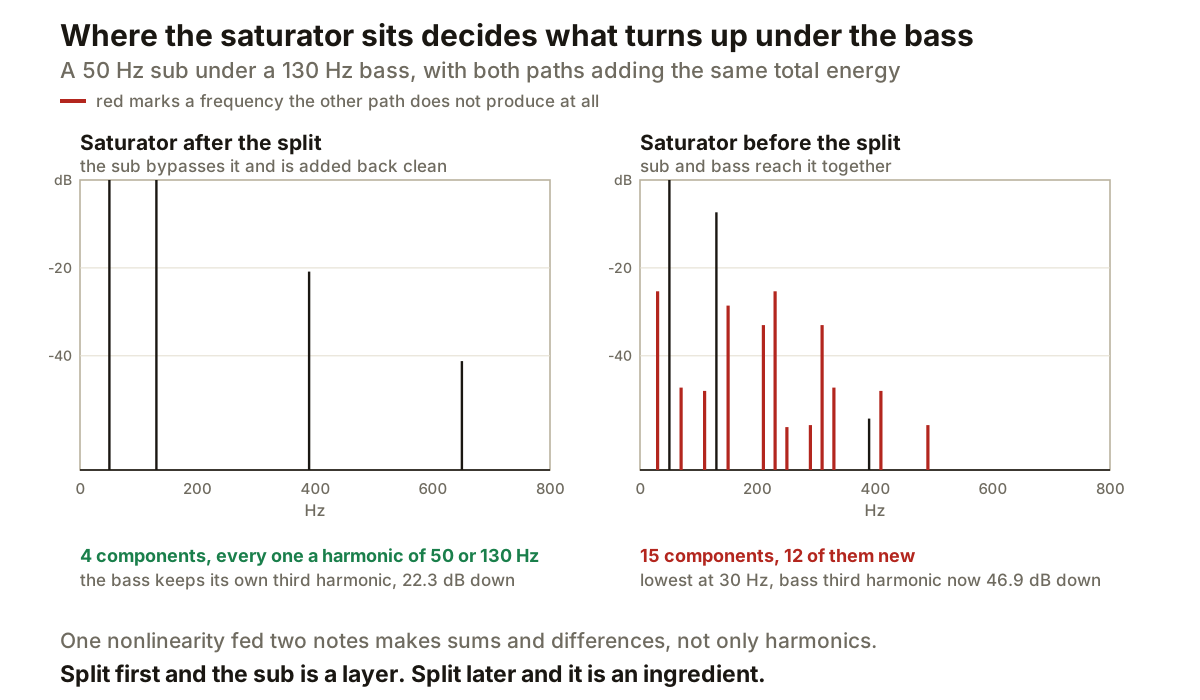
Bass distortion: what changes when the sub goes through it too
Guide
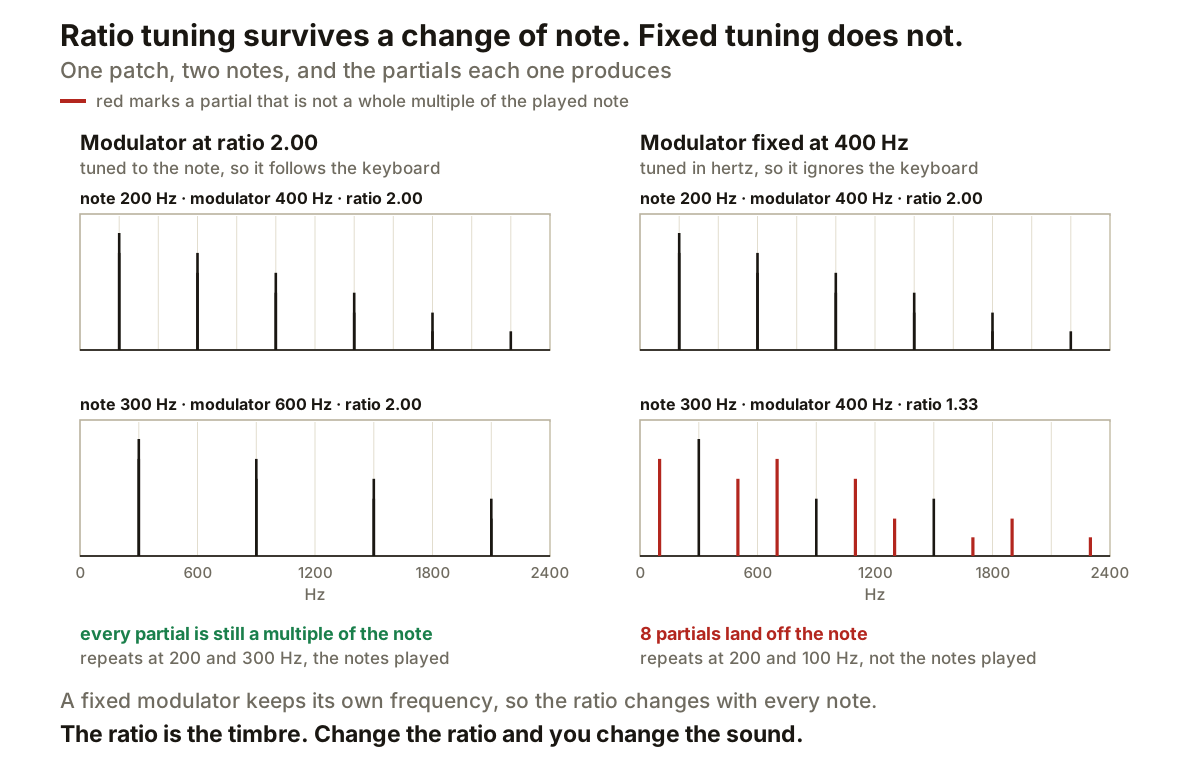
FM ratios: why one number decides whether the harmonics follow the note
Guide
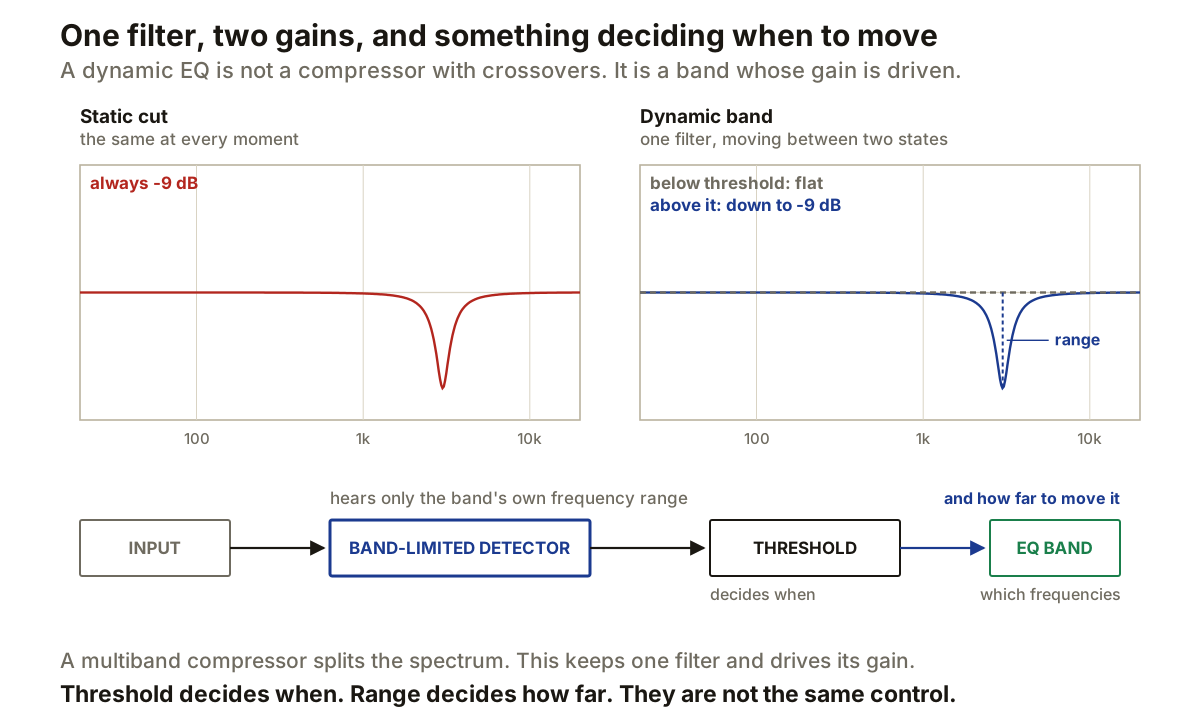
Dynamic EQ: why it reacts differently from a multiband compressor
Guide
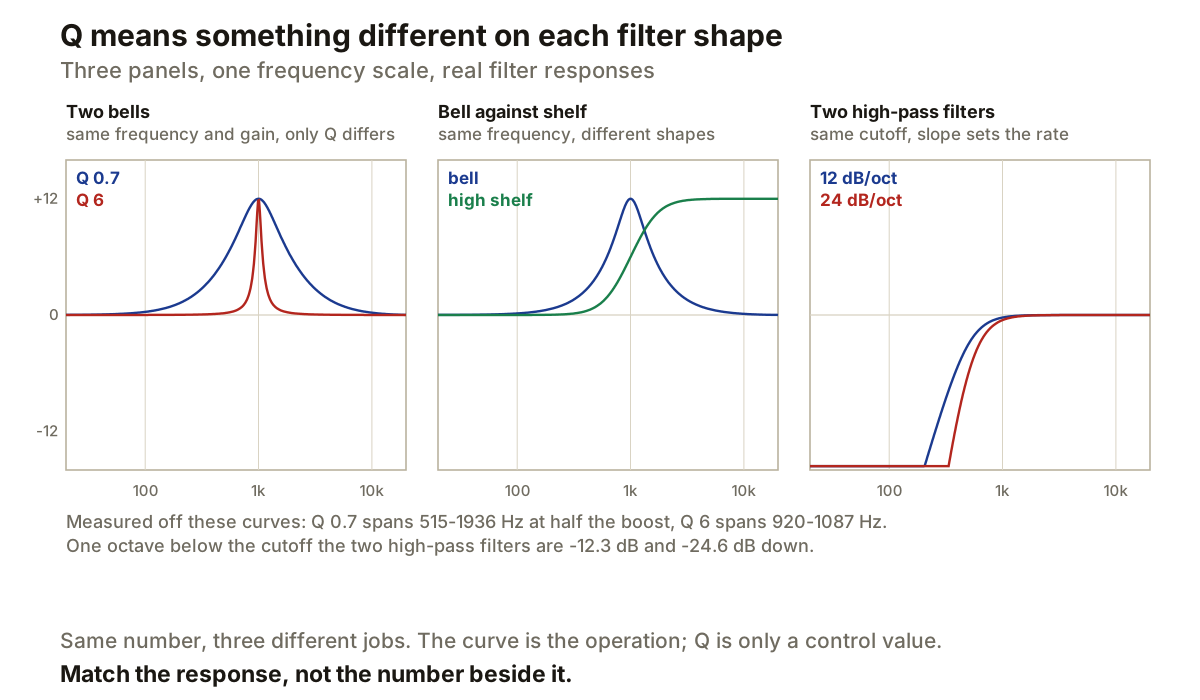
EQ Q: why the same number does not give the same curve
Guide
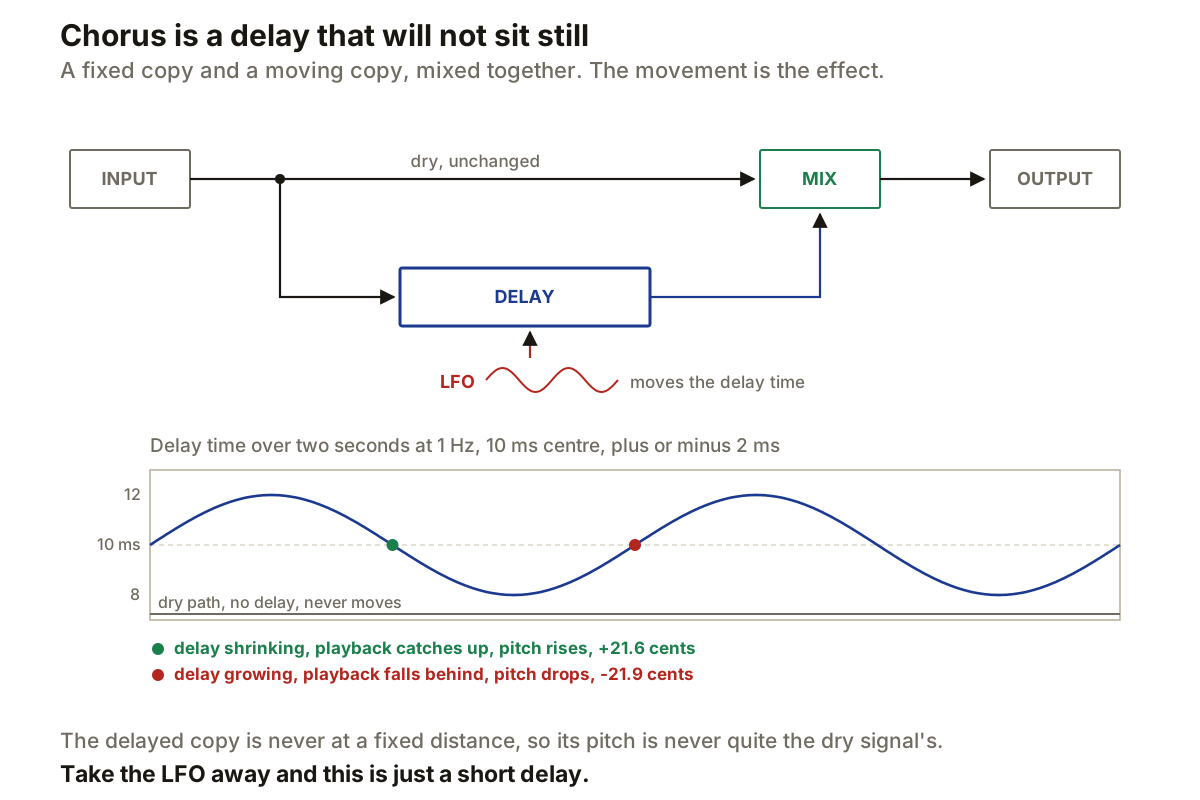
Chorus: why it starts with a delay that will not sit still
Guide
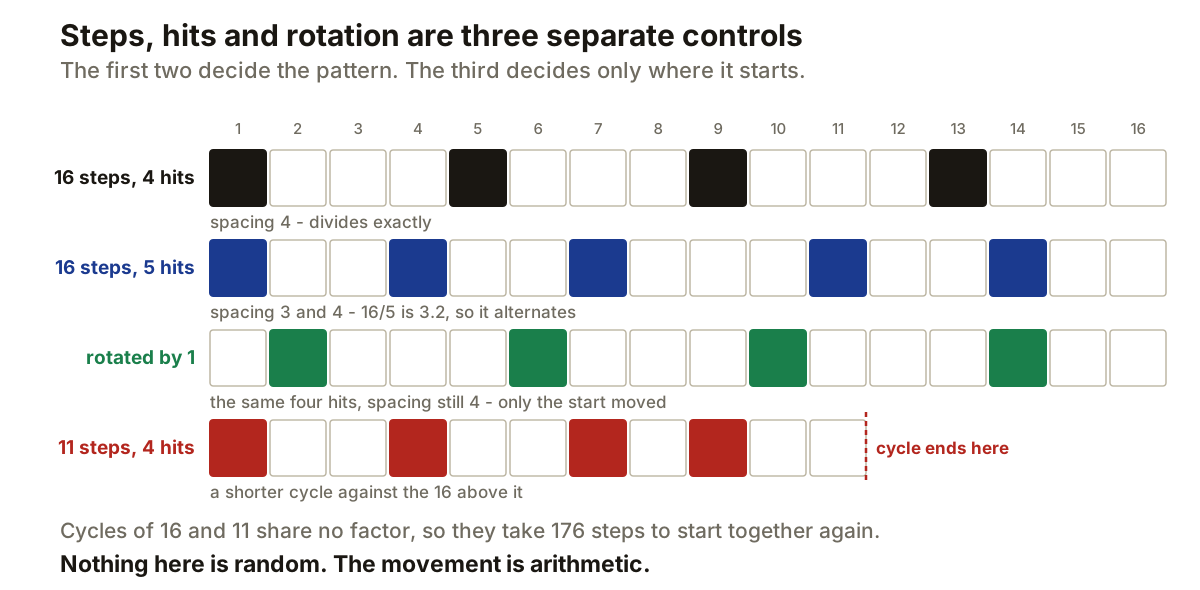
Euclidean sequencing: steps, hits and rotation do three different jobs
Guide
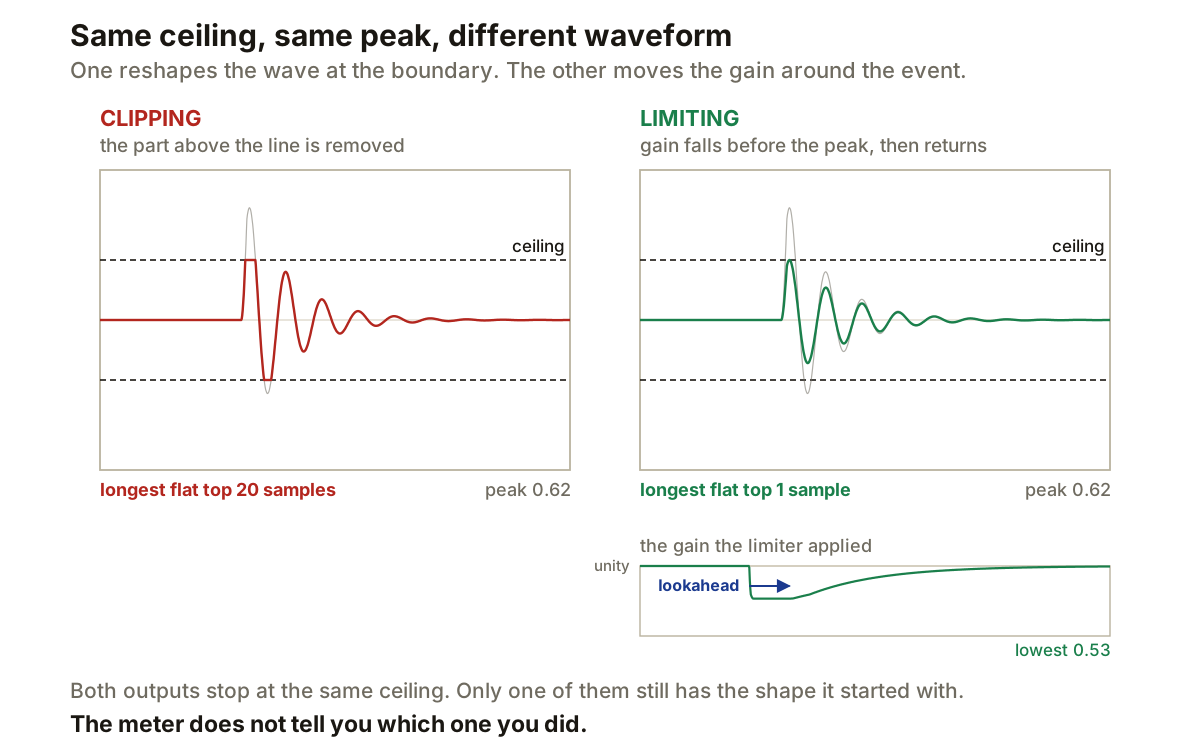
Clipping and limiting: same peak, different waveform
Guide
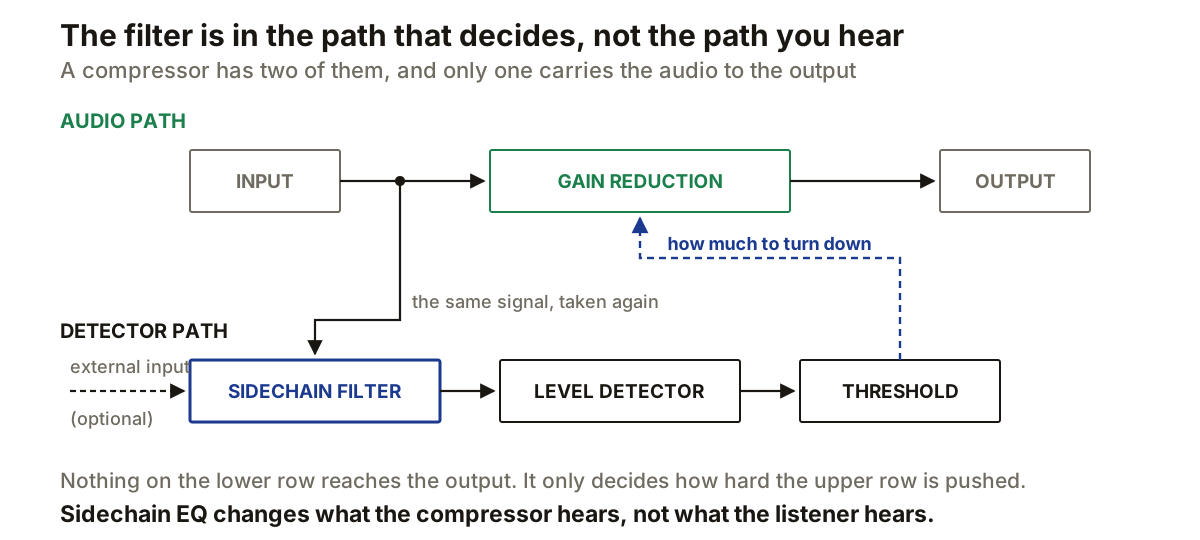
Sidechain filtering: changing what the compressor hears, not what you hear
Guide
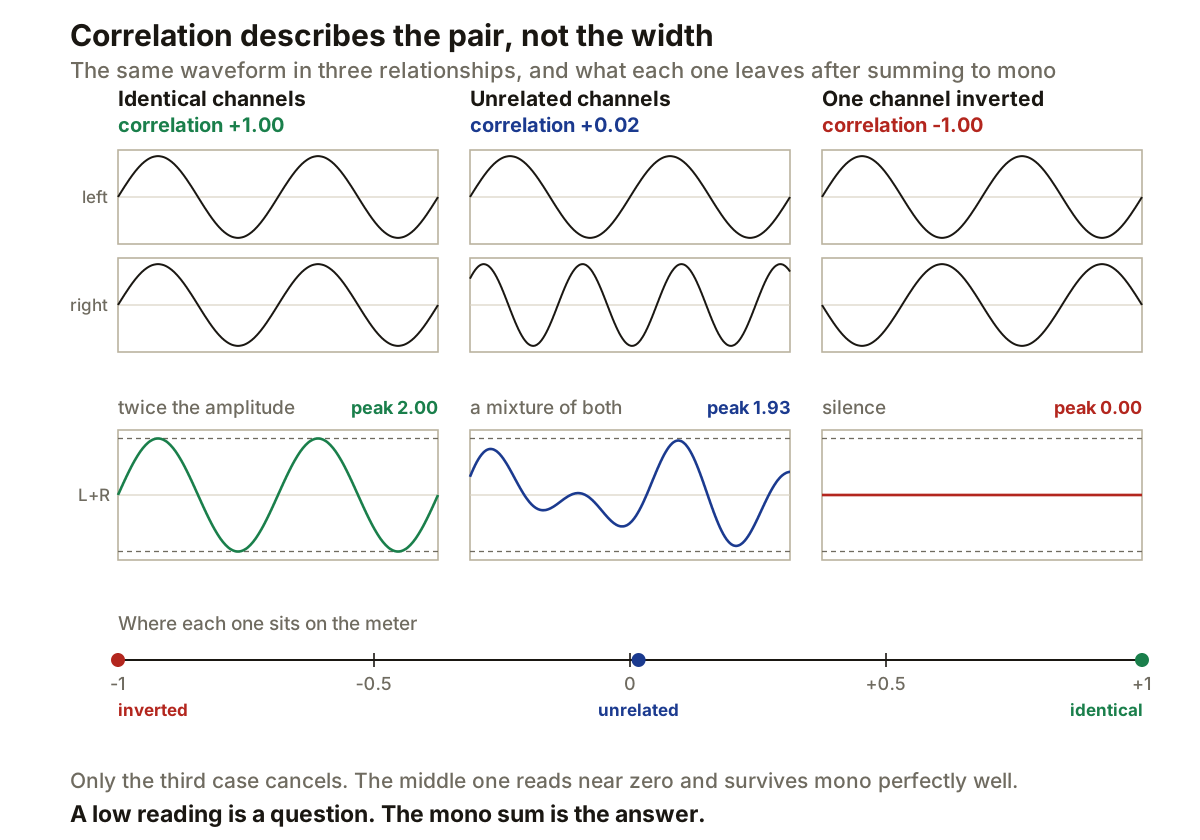
Stereo correlation: what the meter is actually measuring
Guide
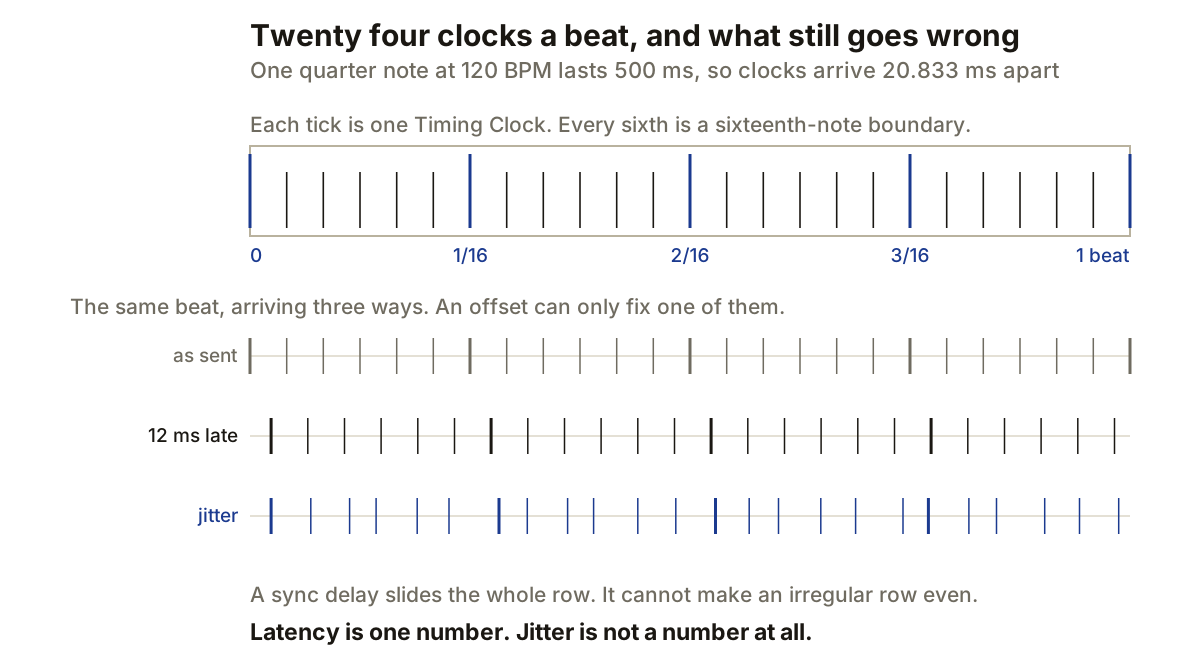
MIDI clock: why 24 timing messages can still drift
Guide
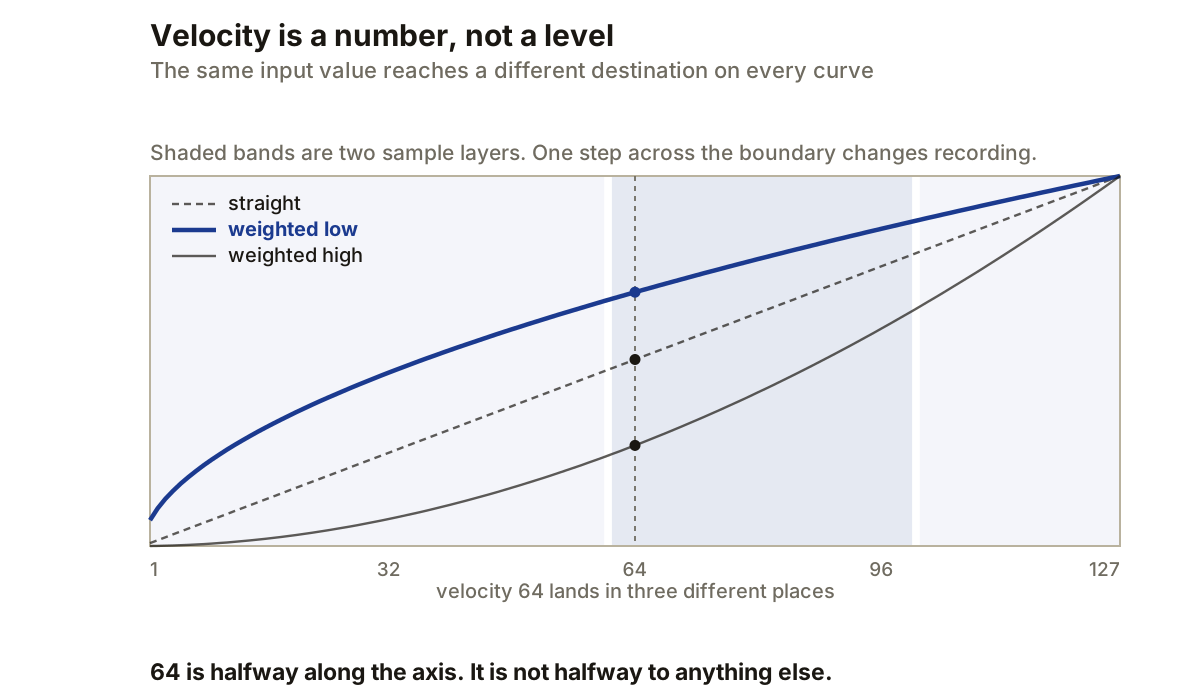
MIDI velocity: why 64 is not half as loud as 127
Guide
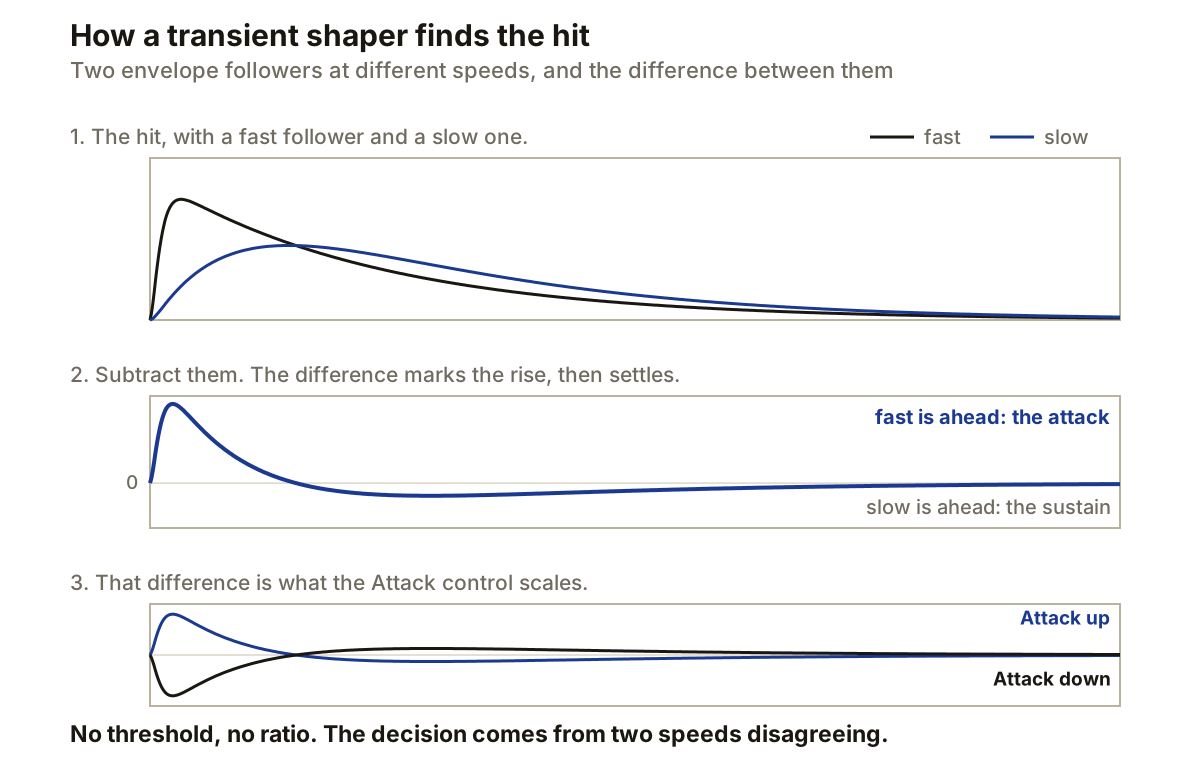
Transient shapers: how attack and sustain controls find events
Guide
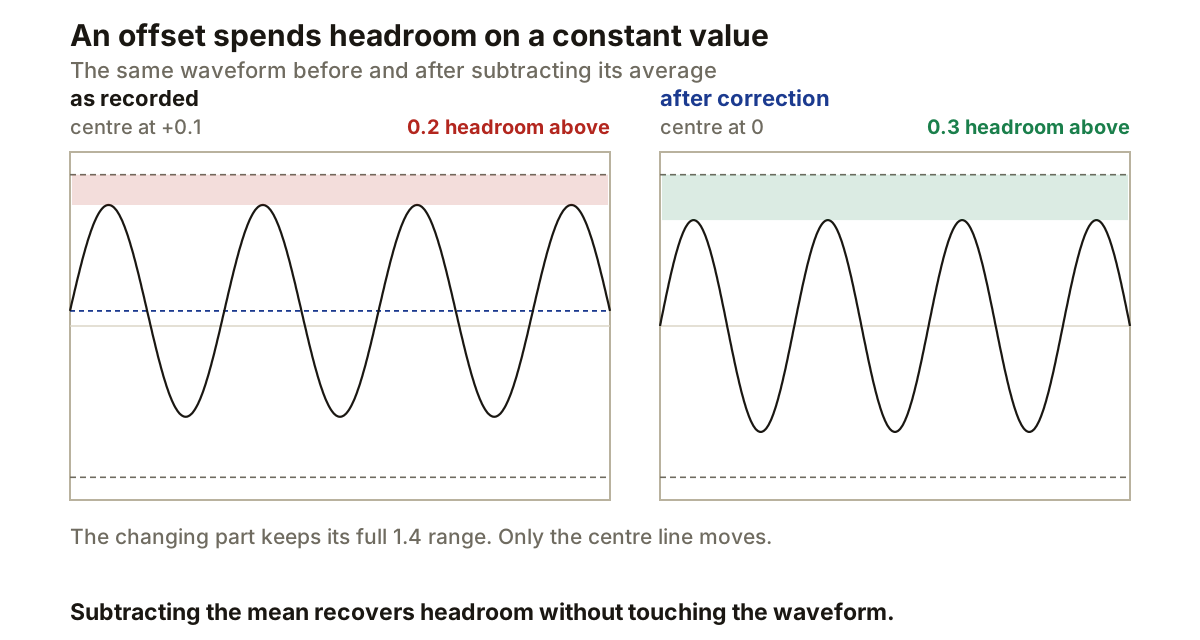
DC offset: why a shifted waveform costs usable headroom
Guide
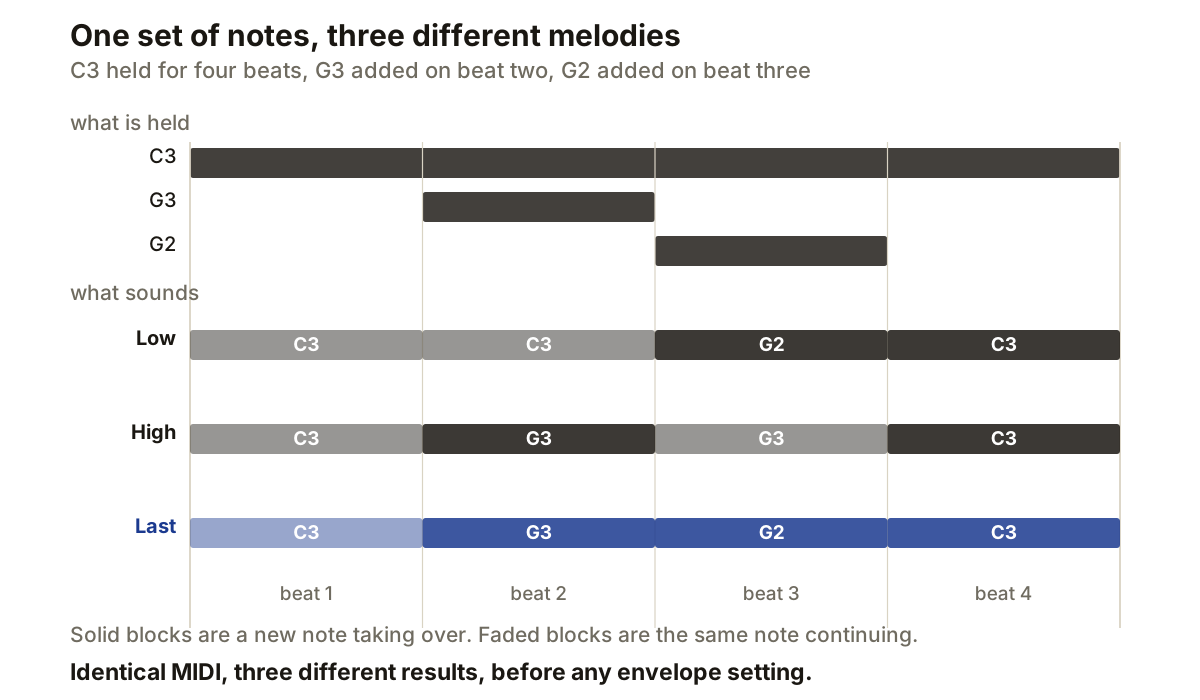
Note priority: why held keys change a monosynth phrase
Guide
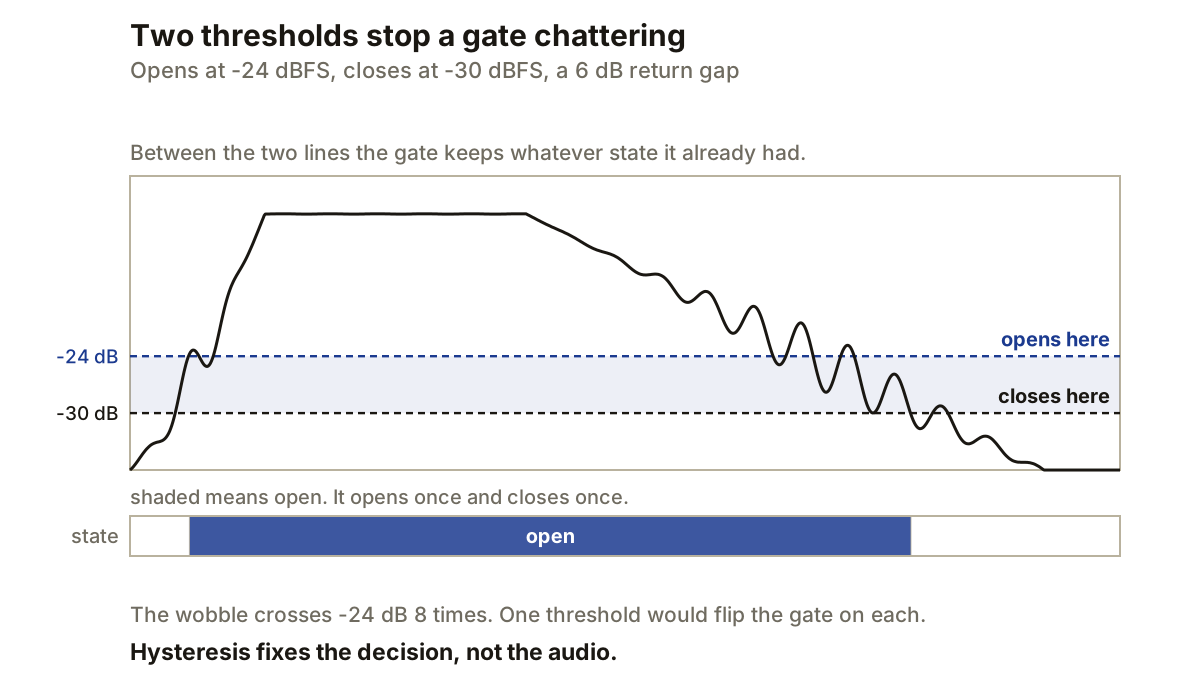
Gate hysteresis: how separate thresholds stop trigger chatter
Guide
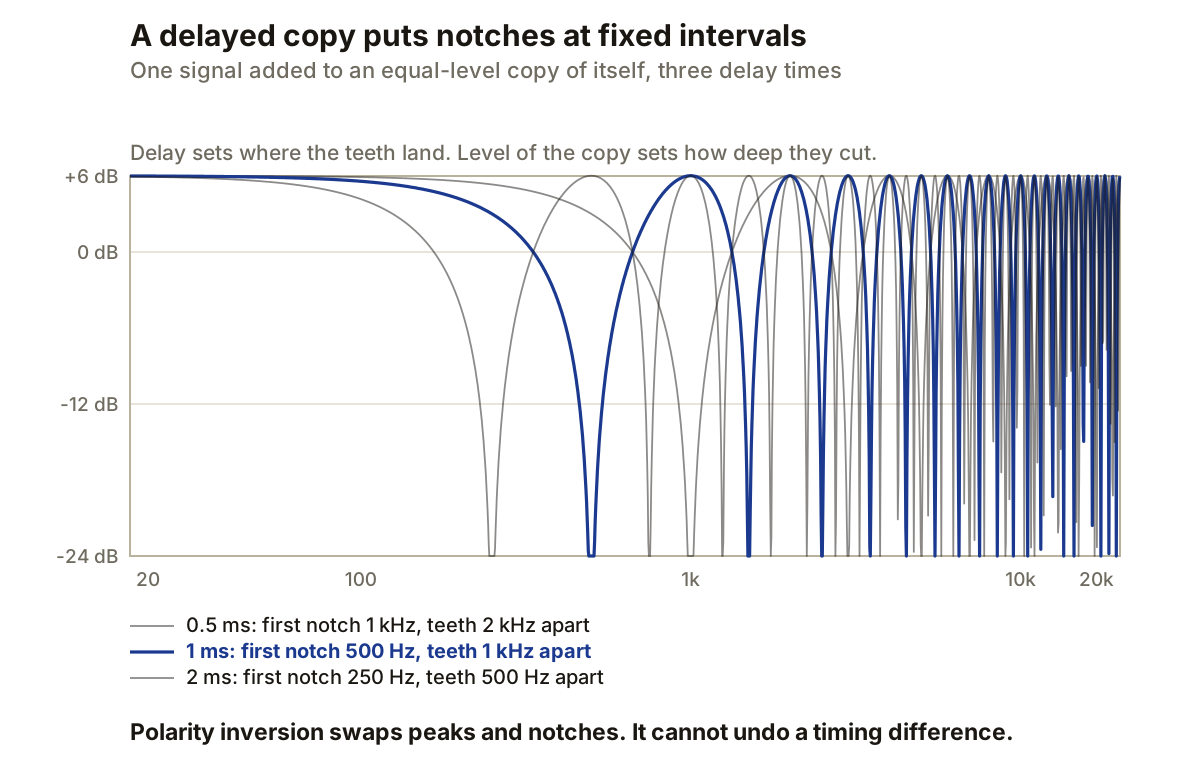
Comb filtering: why a 1 ms delay cuts every other kilohertz
Guide
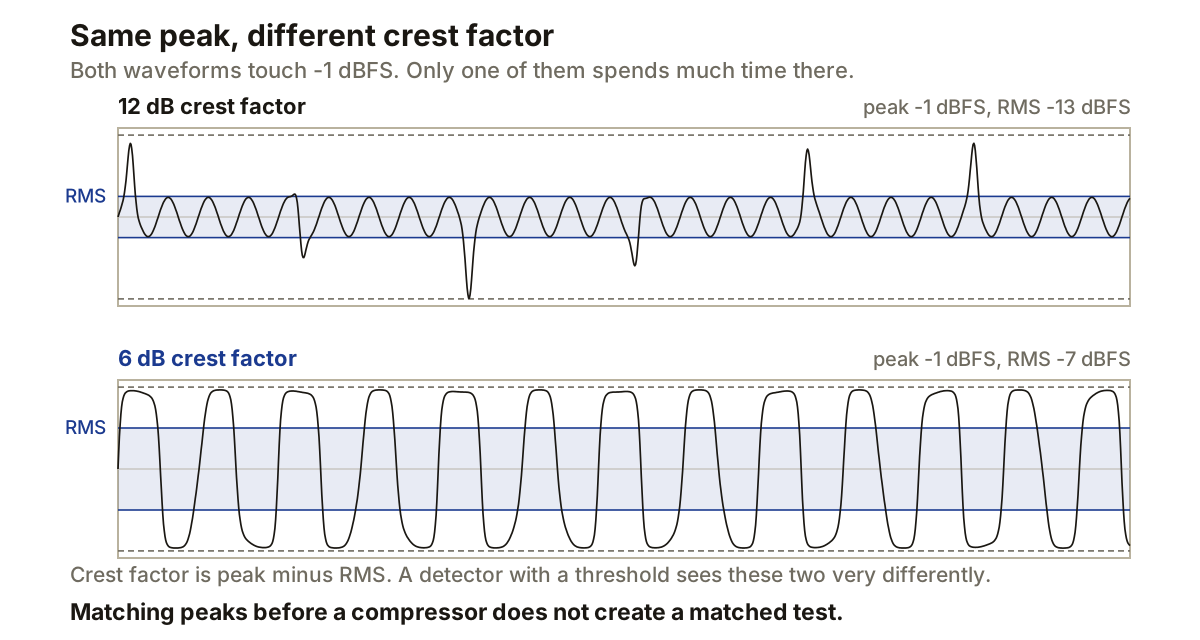
Crest factor: why equal peaks can behave completely differently
Guide
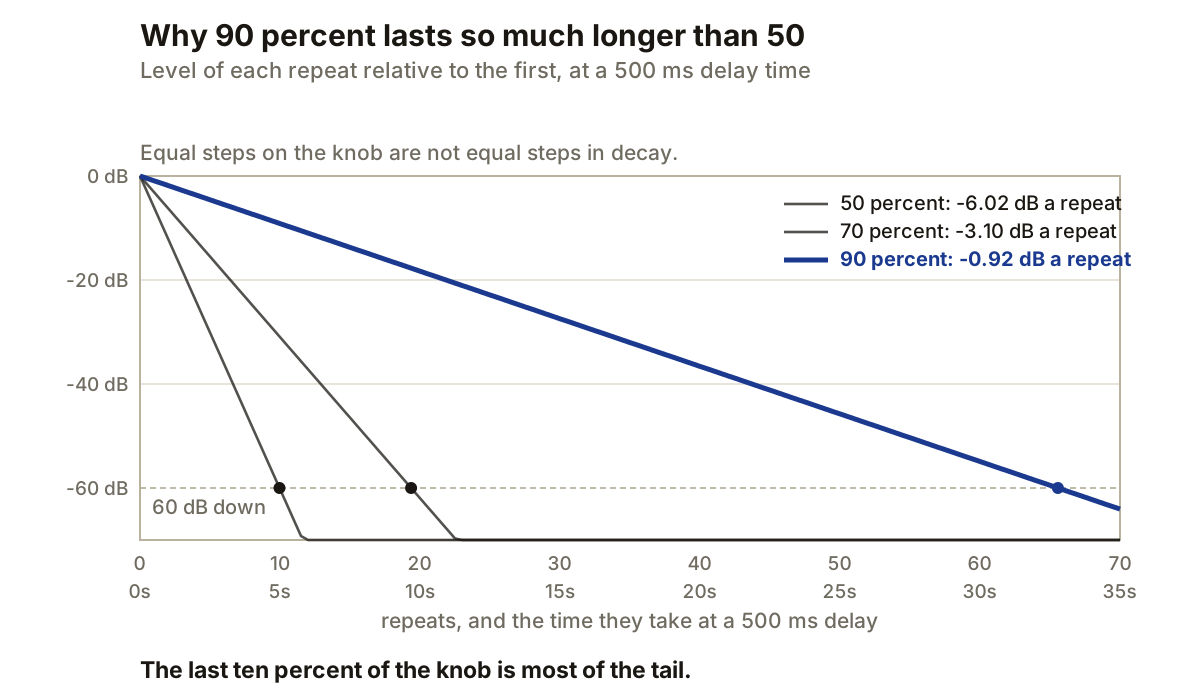
Delay feedback: why 90 percent lasts much longer than 50
Guide
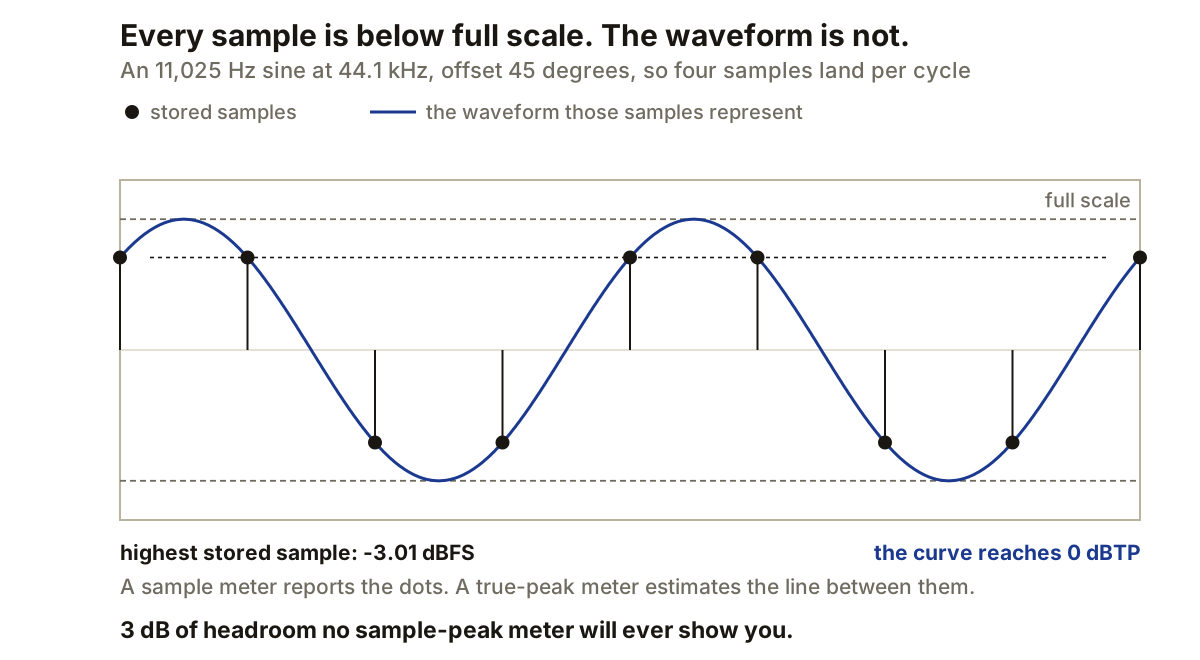
True peak: why samples below zero can still clip
Guide
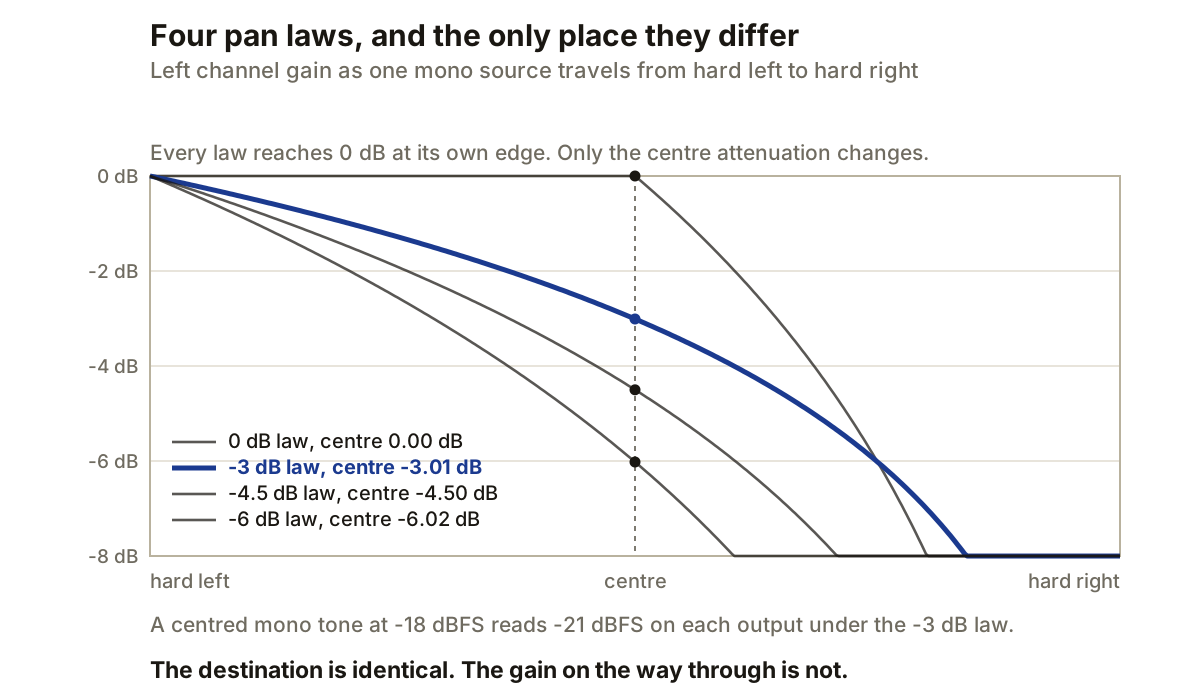
Pan law: why a centred channel changes level while moving
Guide
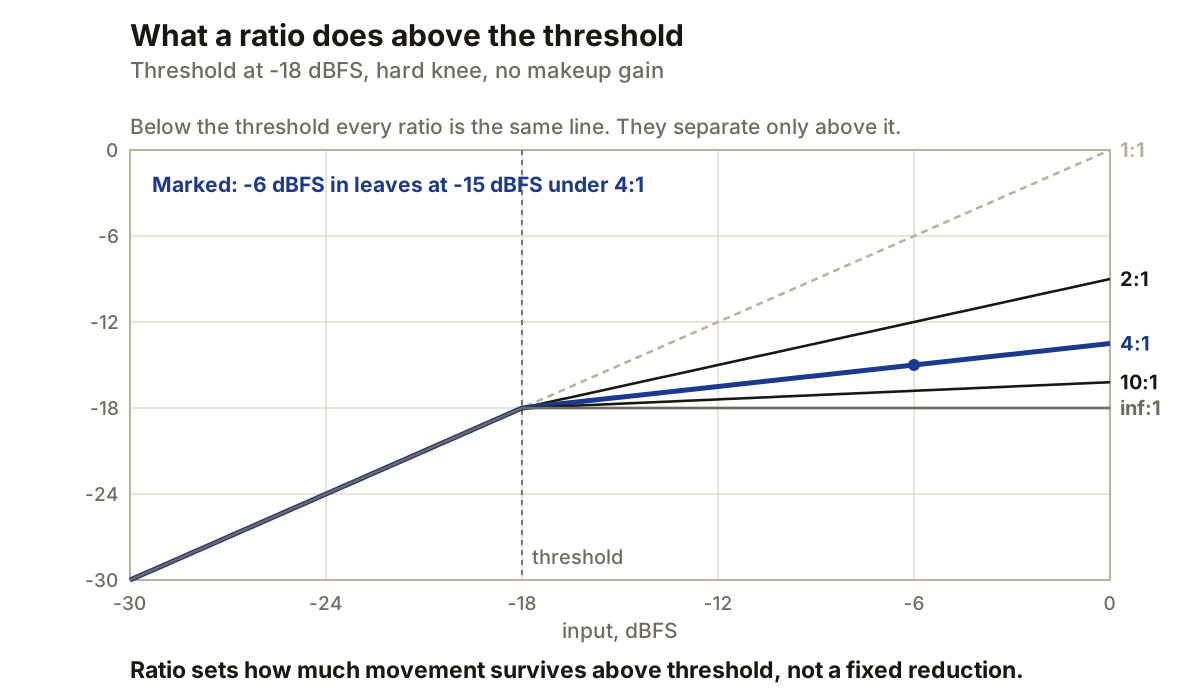
Compressor ratio: what 2:1, 4:1 and 10:1 actually mean
Guide
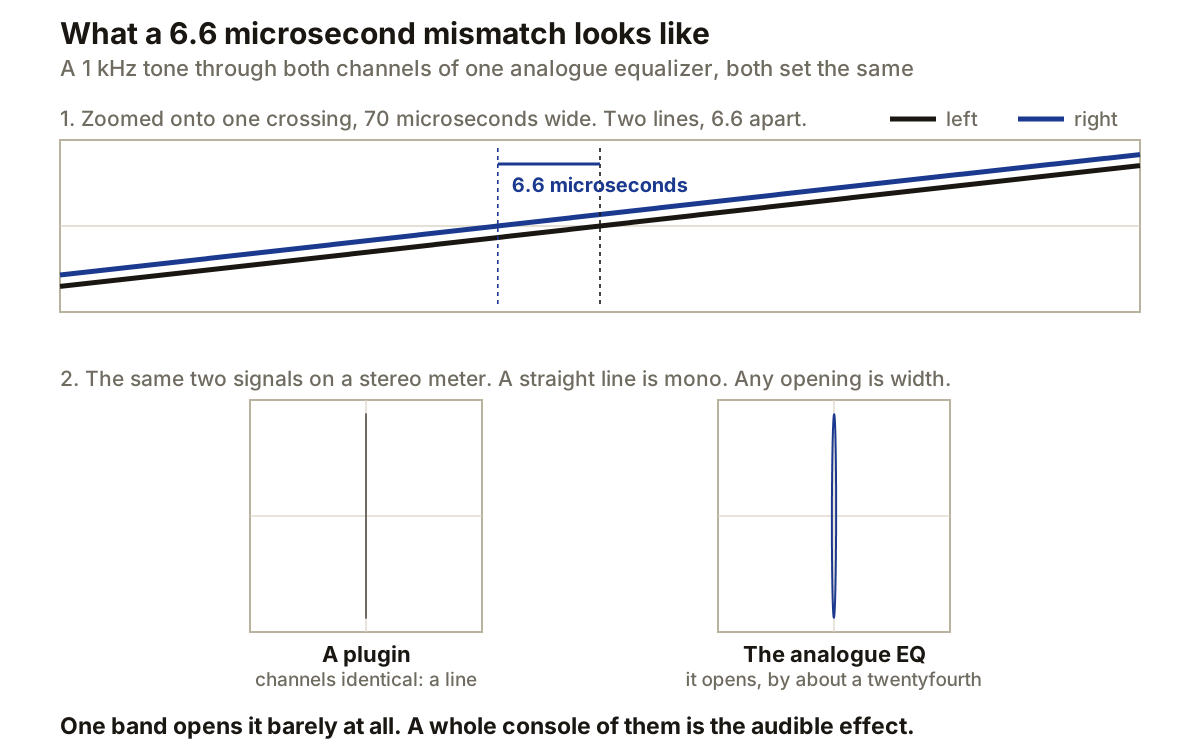
Why analogue sounds wider, and how much of it is components being slightly wrong
Guide
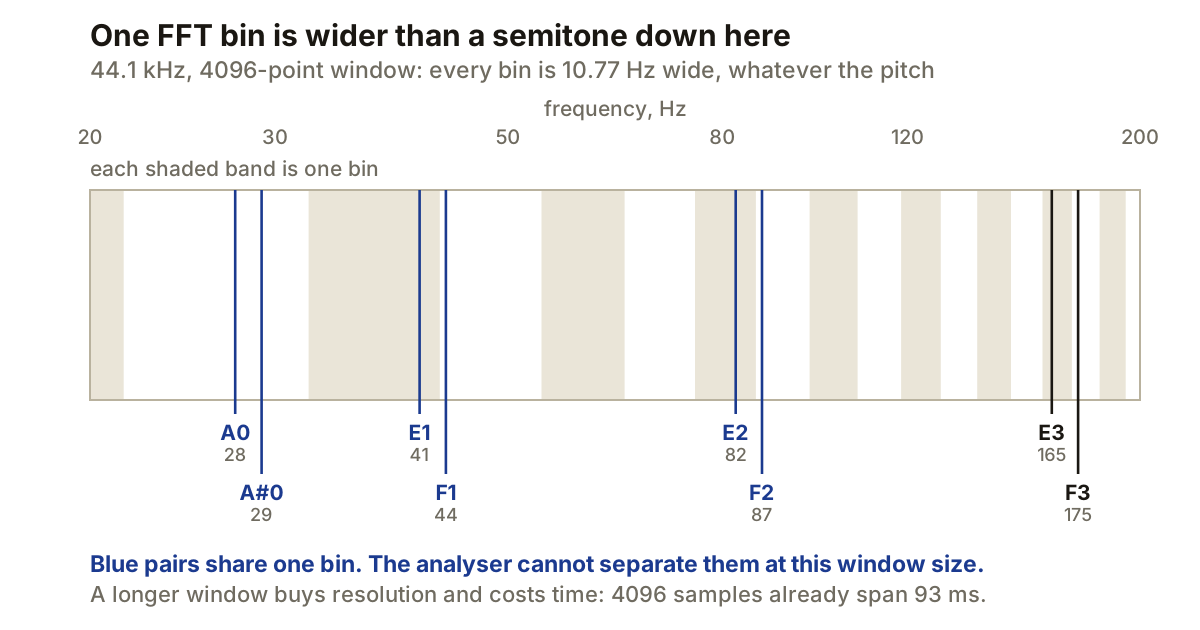
Reading a spectrum analyser without chasing it
Guide
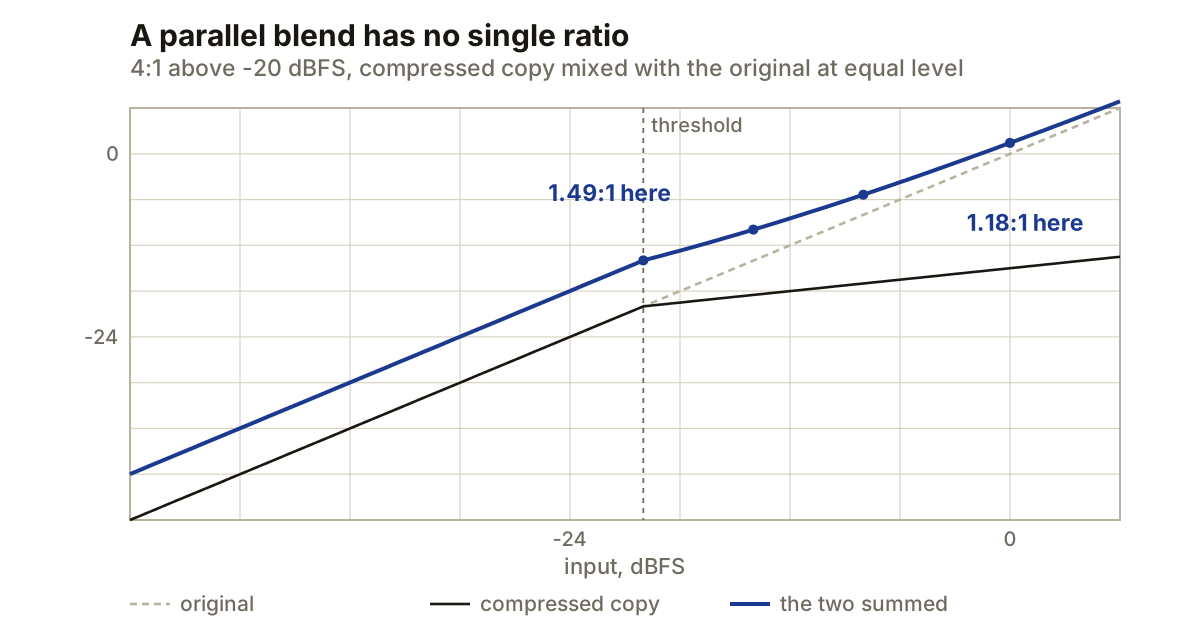
Parallel compression: what the blend actually does to the ratio
Guide
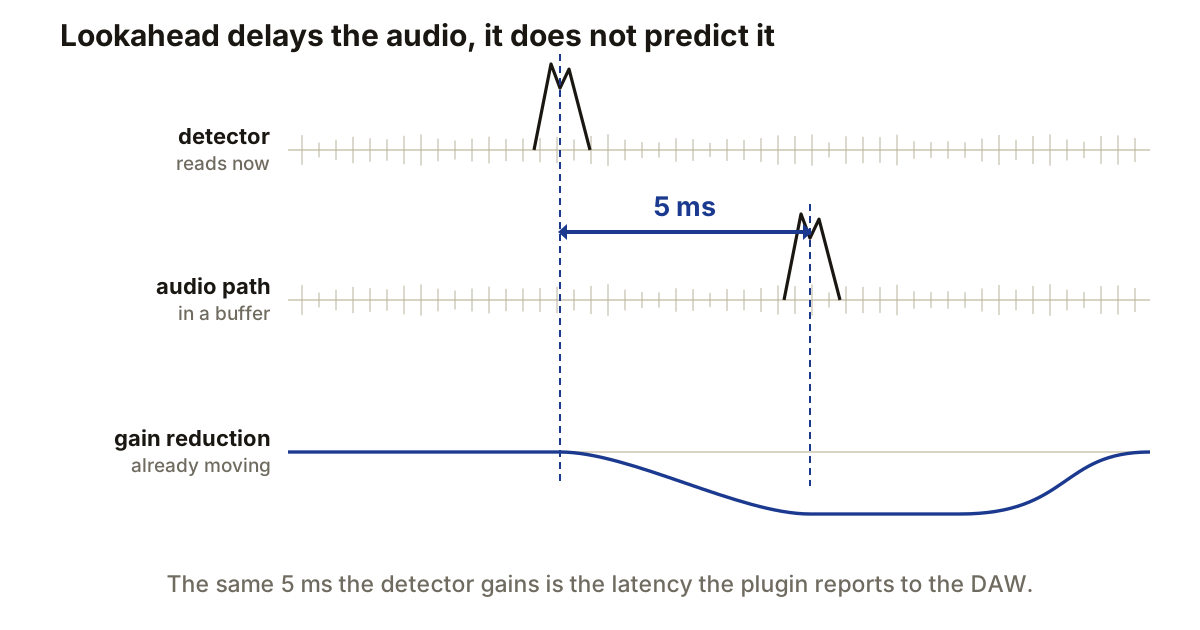
Lookahead: why a limiter delays your audio to see a peak coming
Guide
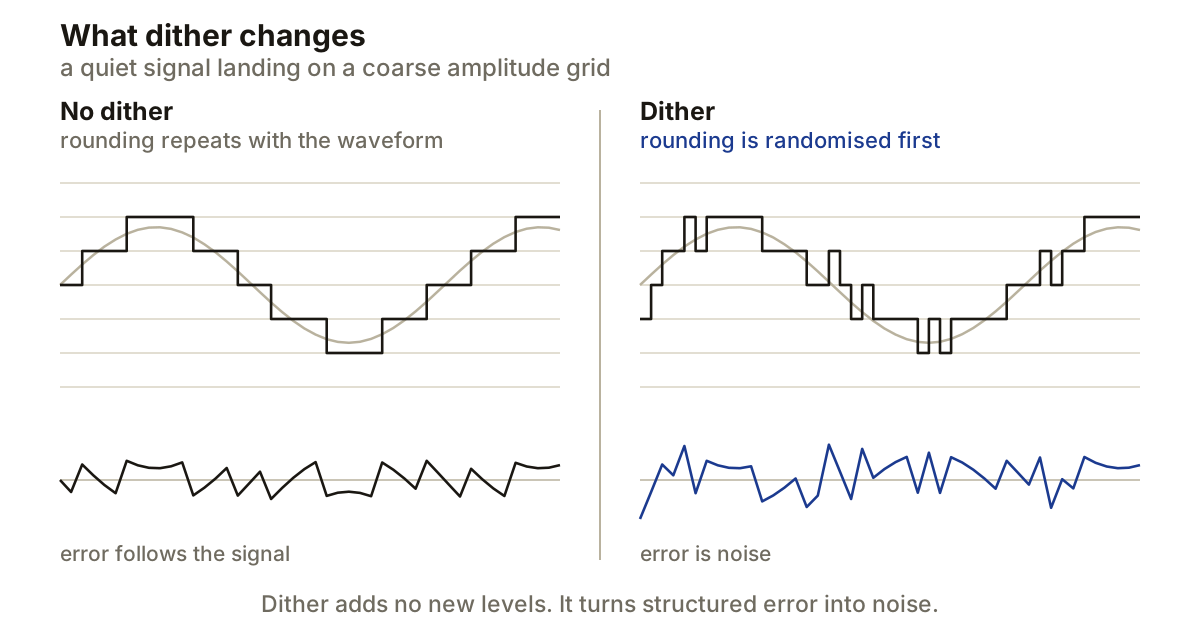
Dither: what it fixes, and why it has to be the last thing you do
Guide
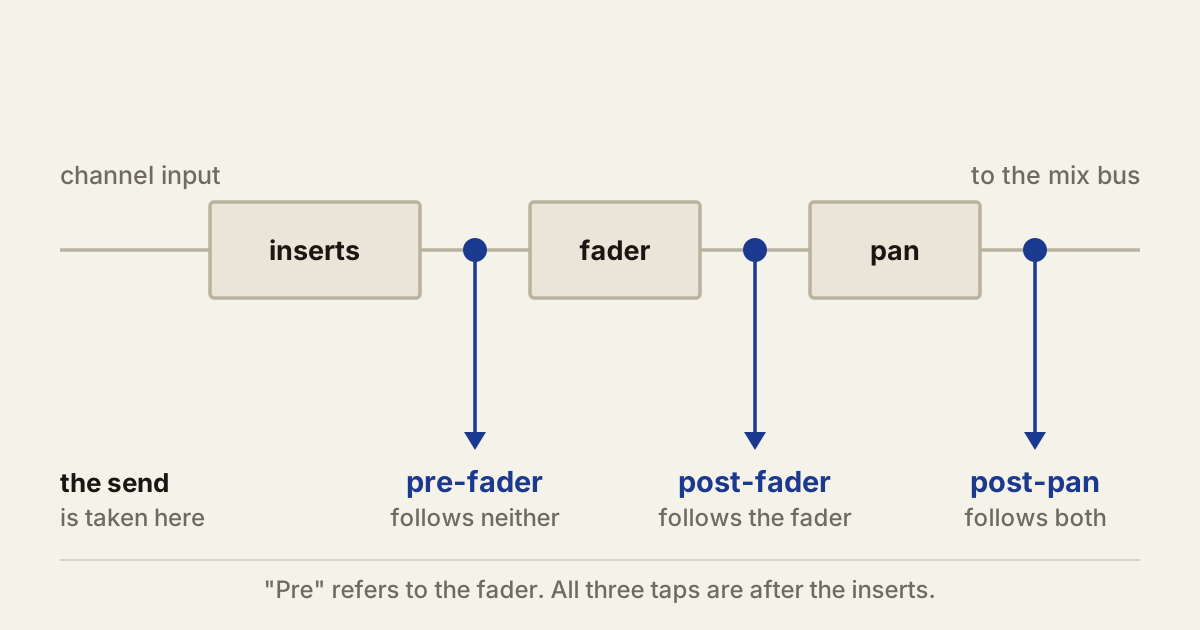
Pre-fader and post-fader sends: what the switch actually changes

Guide
Nudging tracks off the grid: what moving a part 10 ms actually changes

Guide
Pitch and formants: why transposing a vocal changes more than the note

Guide
Mid/side processing: what the centre and sides really contain

Guide
Sidechain ducking: compressor or volume shaper, and when each one fails

Guide
Pre-delay: how to add reverb without pushing a vocal backwards

Guide
How to A/B a plugin honestly, and why louder always wins

Guide
Aliasing: why a distortion plugin can sound cheap for no obvious reason

Guide
Even and odd harmonics, and which saturation you actually want

Guide