Sidechain ducking: compressor or volume shaper, and when each one fails
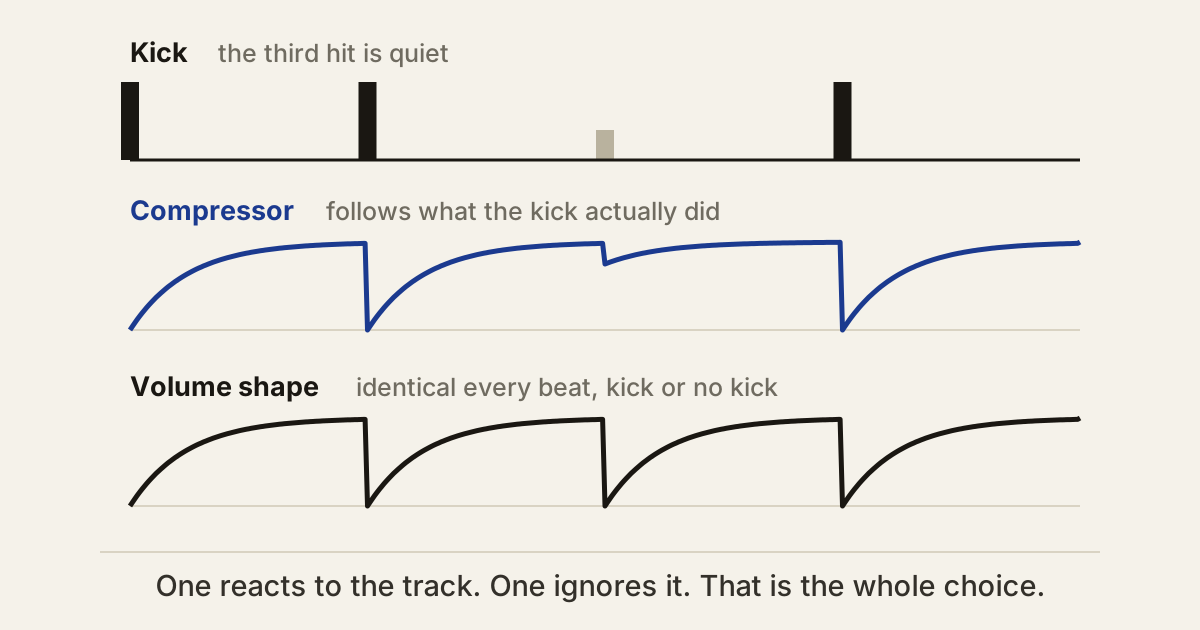
There are two ways to make a bass move out of the way of a kick, and they are not variations on the same idea. One reacts to the track. The other ignores it completely. Picking the wrong one is behind most ducking that sounds either limp or mechanical.
The difference
A compressor keyed from the kick is a measuring device. It listens to the kick channel and reduces the bass in proportion to what it hears. A quieter kick produces a smaller dip. A missing kick produces no dip at all.
A volume shaper draws the same curve every beat regardless of what is playing. If the kick drops out for two bars, the bass keeps ducking into a hole that is not there.
When the compressor is right
Use it when the kick pattern varies, which is most music that is not four to the floor. Ghost notes, a dropped beat, a fill: the compressor tracks all of it without you drawing anything.
It is also the honest choice when ducking is doing a real job rather than being an effect. If the reason you are ducking is that the kick and bass genuinely collide, you want the amount of ducking to follow the size of the collision.
Three settings decide whether it works:
Attack controls how fast the bass gets out of the way. Too slow and the kick transient and the bass overlap anyway, which is the thing you were trying to fix. Very fast attacks can put an audible click on the front of the dip.
Release decides how the bass comes back, and it is the control people set wrong. It has to finish recovering before the next kick. At 128 BPM the beats are around 470 ms apart, so a release near 200 to 300 ms lets the bass return fully and still breathe. Set it longer and the bass never gets back to full level, which reads as a weak low end rather than as ducking.
Threshold and ratio together set the depth. Watch the gain reduction meter and aim for a number you chose deliberately, usually 3 to 6 dB for a mix job, more when you want it to be the effect.
When the shaper is right
Use it when the ducking is the rhythm rather than a fix. That pumping effect is a musical device, and a drawn shape gives exactly the same movement every bar, sits precisely on the grid, and can be as extreme as you like without a compressor’s attack and release fighting you.
It also solves a specific problem: ducking against a kick that is not there. A shaper can pump a pad against an implied beat in a breakdown where nothing is triggering.
The failure mode is the one in the picture. The moment the drum pattern varies, the shape stops matching the music, and because it never fails loudly it usually survives until someone hears the finished track and cannot say why it feels stiff.
The quick rule
If the kick pattern is identical every bar and the pumping is meant to be heard, draw it. If the pattern varies at all, or the ducking is there to solve a frequency collision rather than to be a feature, use the compressor.
Producer’s note
Whichever you use, check the result with the kick muted. Ducking hides its own damage: with the kick playing, your ear fills in the gap and the bass sounds continuous. Solo the bass and you can hear how much of it you actually removed. It is common to find the low end has been carved down by far more than intended, and the mix has been quietly missing weight for the whole session.