Even and odd harmonics, and which saturation you actually want
Saturation plugins are sold with adjectives. Warm, smooth, aggressive, vintage, glued. None of those words tell you what the plugin will do to a bassline, and two plugins described identically can behave in opposite ways. There is one distinction underneath all of it that does predict the result, and it takes about five minutes to understand.
Saturation works by changing the shape of the waveform. Anything that changes that shape adds new frequencies that were not in the original signal, sitting at whole-number multiples of each note you play. Those are harmonics. Which multiples appear is the whole story.
The two families
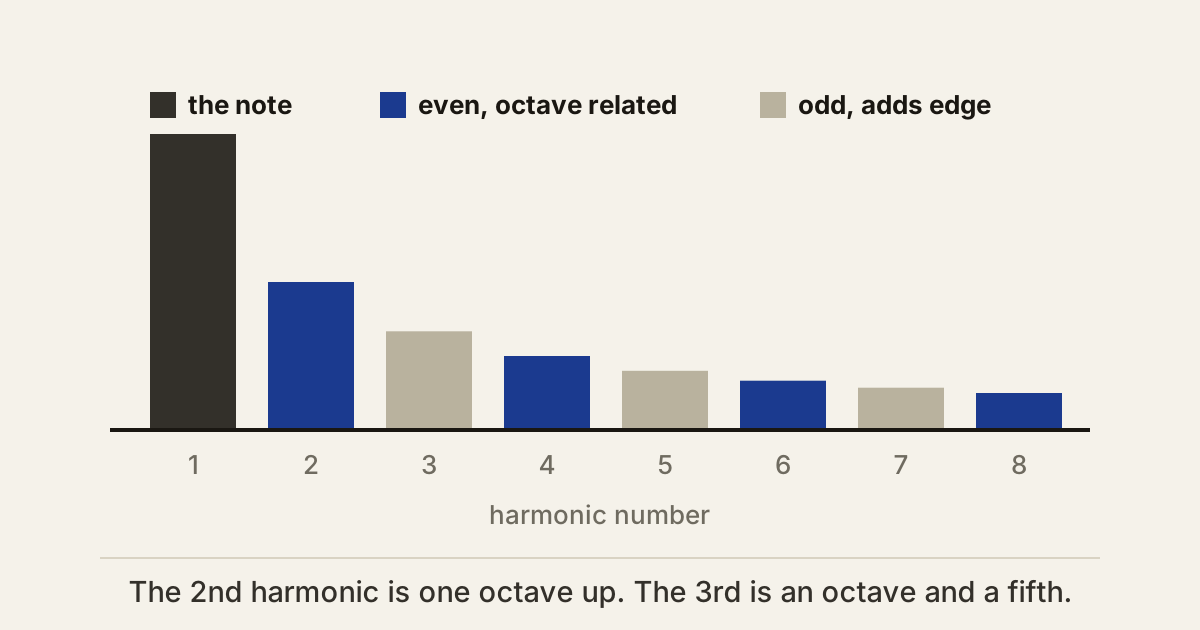
Even harmonics are the 2nd, 4th and 6th. The 2nd sits exactly one octave above the note, the 4th two octaves above. They are the same pitch class as what you played, so the ear does not hear them as new notes. It hears the original sound getting bigger and rounder. This is what people mean by warmth.
Odd harmonics are the 3rd, 5th and 7th. The 3rd sits an octave and a fifth above, the 5th two octaves and a major third above. These are different pitch classes, so they read as added texture rather than added weight. In small amounts that is presence and edge. Pushed hard it becomes grit, then buzz.
Where they come from
The shape of the distortion decides the family, and the rule is simple.
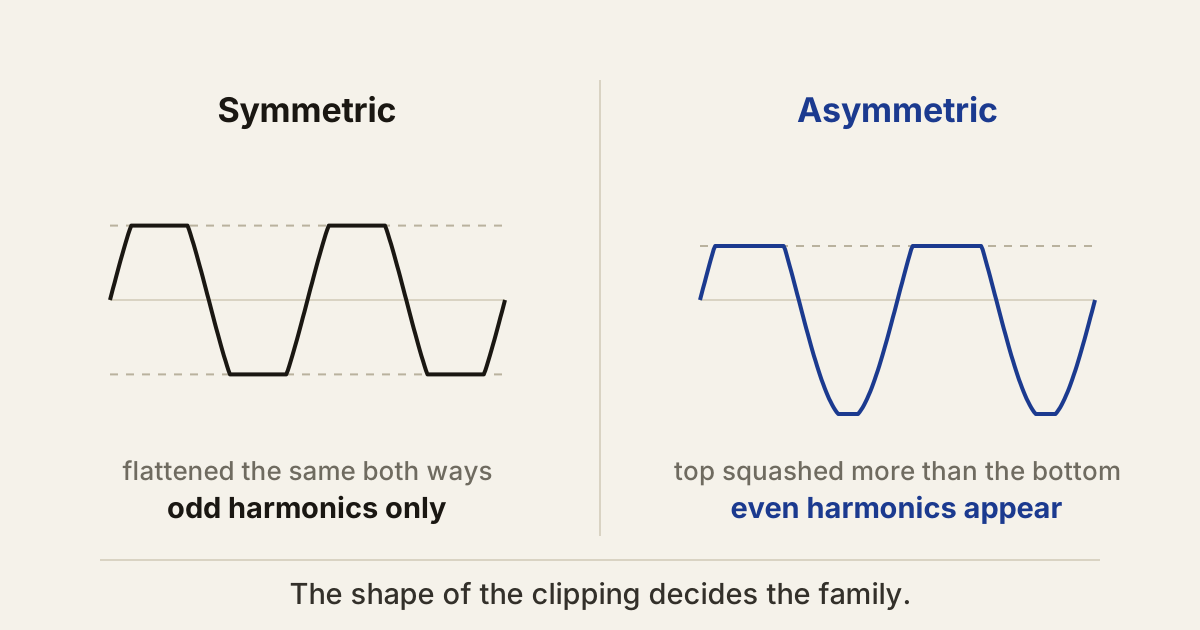
If a circuit squashes the top and bottom of the waveform by the same amount, it produces odd harmonics and the even ones cancel out. Symmetrical clipping is what push-pull output stages and plain digital clippers do.
If it squashes one half more than the other, the waveform is no longer symmetrical, and even harmonics appear alongside the odd ones. Single-ended valve stages and many transformer designs behave this way, which is why they are the ones described as warm.
That is the mechanism behind the vocabulary. Tube, tape and transformer are not magic categories. They are circuits that happen to distort asymmetrically.
Treat this as the tendency rather than a law. Real components are imperfect, and a design that is nominally symmetrical will still leak some even harmonics. The rule tells you which way a circuit leans, not exactly what will come out of it.
Choosing on purpose
Even-heavy saturation adds weight without changing the character of a part. It is the safer choice on anything already carrying the song: lead vocals, bass, a piano that needs to feel closer. The part sounds like itself, only more present.
Odd-heavy saturation adds an edge that helps a part cut. It is useful when something is being buried and level alone is not fixing it, because the new harmonics land in a register the ear is sensitive to and where the mix is often less crowded. Drums, guitars and synth leads take it well.
The practical version: if the problem is that a part feels small, reach for even. If the problem is that it feels buried, reach for odd.
What to look for in a plugin
Most saturators do not label themselves this way, but the controls give it away. A bias or symmetry control moves between the two families, and it is the most useful knob on the plugin even though it is rarely the biggest. Anything offering tube against transistor modes, or triode against pentode, is usually offering asymmetric against symmetric. A drive control alone, with no character option, has picked a family for you.
You can also just listen for it. Feed a plugin a sine wave and look at a spectrum analyser. Peaks only at odd multiples means symmetric clipping. Peaks at every multiple means asymmetric. That takes thirty seconds and tells you more than any product description.
Producer’s note
Harmonics stack. Three plugins each adding a modest amount of third harmonic will build a sharper edge than one plugin driven hard, and because each stage sounds mild on its own the problem is invisible until the mix is finished. If a mix feels harsh and no single plugin seems responsible, count how many saturators are in the chain before reaching for an EQ to fix it.