Mid/side processing: what the centre and sides really contain
Mid/side controls look like a clean way to reach into a stereo mix: turn up the sides for width, EQ the mid to make room for a vocal. The trap is taking those labels too literally. The Mid channel is not a stem containing every sound in the centre, and the Side channel is not a stem containing everything panned left and right.
They are two different ways of describing the same stereo signal. Left and Right tell you what comes from each speaker. Mid and Side tell you what the speakers have in common and what is different between them.
What Mid and Side actually are
A mid/side encoder adds the left and right channels to create Mid, then subtracts one from the other to create Side:
Mid  = (Left + Right) / 2
Side = (Left - Right) / 2
The exact gain scaling varies between processors, but the relationship is the same. To return to normal stereo, the decoder adds Side to Mid for the left channel and subtracts it for the right:
Left  = Mid + Side
Right = Mid - Side
If nothing is processed between those stages, the conversion is lossless. Mid/side encoding by itself does not widen the signal, alter its phase or improve mono compatibility.
A mono sound panned dead centre is identical in the left and right channels. It adds in Mid and cancels in Side. A stereo reverb, chorus, double-track or spaced microphone recording has differences between left and right, so some of it appears in Side. When the mix is collapsed to mono, the Side component cancels and the Mid component remains.
Why a hard-panned sound is in both
The common shortcut says Mid means centre and Side means edges. It is useful until it is not.
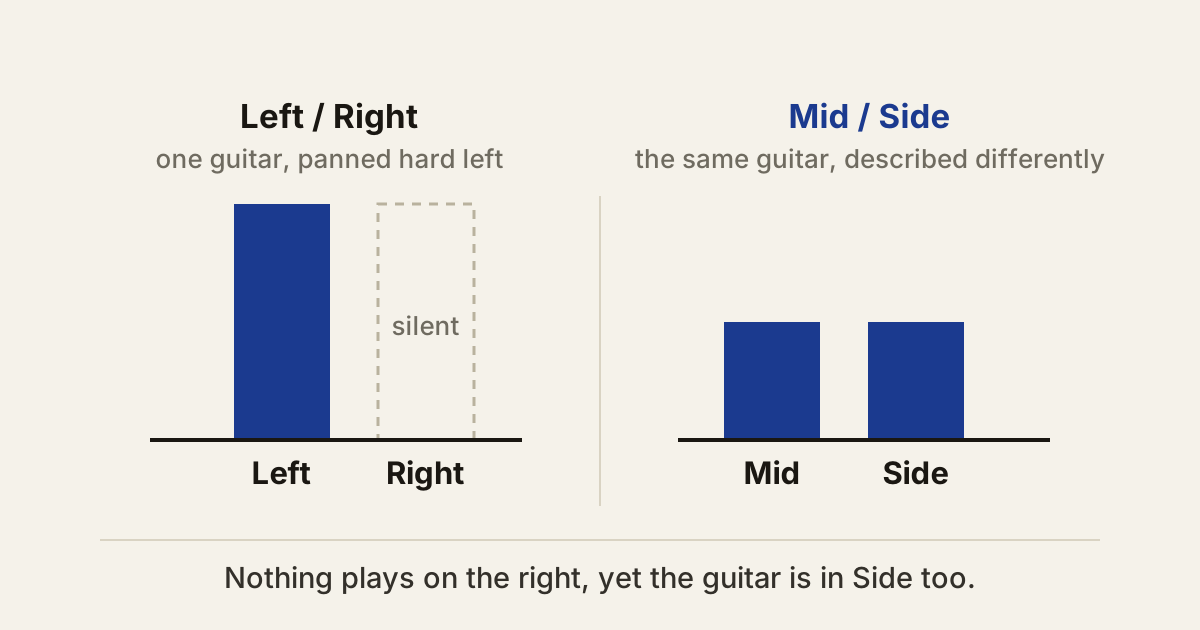
Take a mono guitar panned fully left. There is signal in the left channel and silence in the right. Add those channels and the guitar appears in Mid. Subtract them and it also appears in Side. The decoder needs both components to rebuild a guitar on the left and silence on the right.
That is why cutting a frequency from Side does not simply remove that frequency from some separate layer at the edge of the mix. On a hard-panned source, it changes the balance between the Mid and Side components that establish its position. The sound can become narrower, shift towards the centre or take on a different tone in each speaker.
The same applies to Mid processing. A Mid EQ affects strongly centred material, but it also affects the common component of panned instruments, stereo ambience and effects. Mid is often dominated by kick, bass, snare and lead vocal in a conventional mix. It is not exclusive access to them.
What the common moves change
Raising Side level increases the difference between left and right, so the image feels wider. Lowering Side narrows it. Remove Side completely and the result is mono. This is the basic operation behind many width controls.
The cost becomes clear in a mono check. Extra Side level may sound impressive in stereo, but that added energy disappears when the channels are summed. A part that seemed louder after widening can fall back in level or change tone in mono. If the original left and right channels already contain strong polarity or timing differences, pushing Side further can make the loss more severe.
A high-pass filter on Side is often used to keep low frequencies centred. It can work well on stereo room noise, reverb or a synth patch whose sub frequencies wander between channels. It is not a universal “mono bass” switch. A low instrument that is deliberately off-centre also contributes to Side, so the filter can move or thin it.
Mid/side compression changes the stereo image dynamically. Compressing Side can narrow a mix when wide cymbals, ambience or delays become loud. Compressing Mid can make the image appear wider whenever the common centre is reduced. That movement may be useful, but it can also make the width pump even when the overall level sounds controlled.
A reliable way to work
Use Mid and Side solos to identify what is feeding each channel, then make decisions in normal Left/Right stereo. Neither solo is meant to sound complete on its own. The Side channel in particular often sounds hollow because it is the difference signal waiting to be decoded.
Keep the first move small and level-match the bypass. A Side boost can win a comparison simply because it adds energy. Then check the full mix in mono. A correlation meter can warn about extreme differences, but it cannot tell you whether the vocal changed level, the snare lost weight or a panned instrument moved.
Mid/side processing is most useful when the problem is genuinely different in the common and difference components. If the left side of a recording is simply brighter than the right, left/right EQ is the direct tool. Choosing the matrix that describes the problem correctly is more important than choosing the more sophisticated-looking mode.
Producer’s note
When a Side-only EQ move seems to pull a panned instrument inward or outward, that is the matrix working normally. A hard-panned source exists in both Mid and Side, and changing only one component changes how its position is rebuilt. Check the instrument’s level and tone in mono before trying to correct the movement with another band.