Pitch and formants: why transposing a vocal changes more than the note
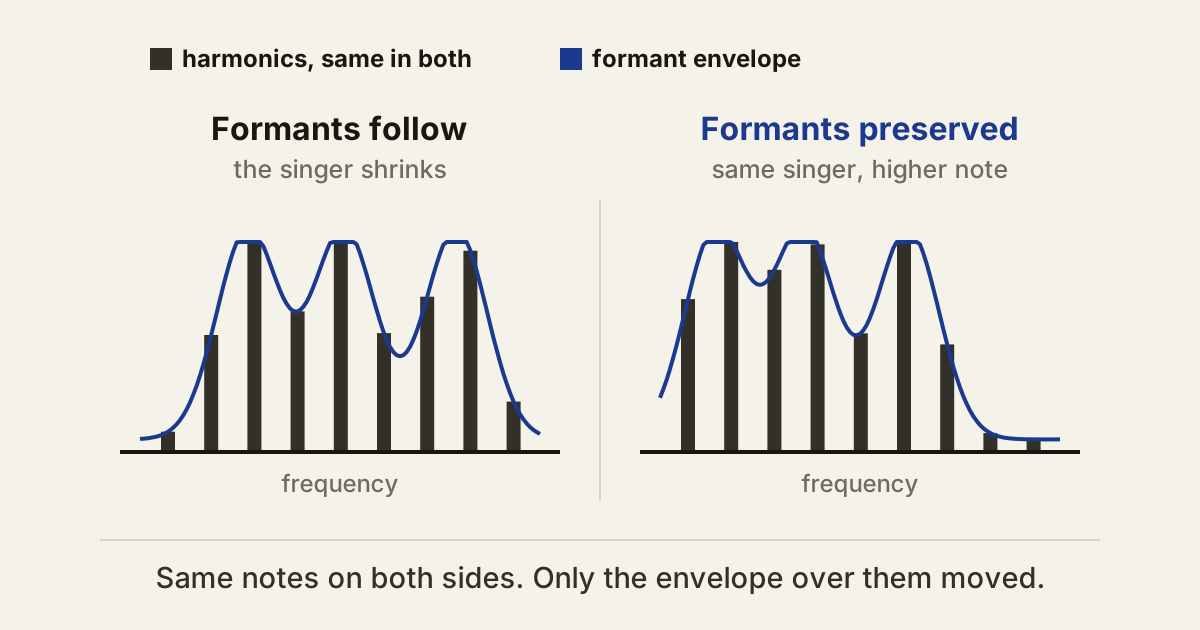
Pitch a vocal sample up an octave with simple resampling and two things move together. The musical note rises, but so do the resonances that describe the size and shape of the singer’s vocal tract. The melody is higher and the voice seems smaller. A modern pitch shifter can separate those changes, which is what its Formant control is for.
Pitch and formants belong to the same sound, but they describe different parts of it. Knowing which one you are moving makes vocal correction cleaner and creative pitch effects much easier to control.
The note and the resonator
The fundamental frequency gives a voiced sound its musical pitch. If a singer holds A3, the repeating vibration of the vocal folds establishes that note and produces a series of harmonics above it.
The throat, mouth and tongue then act as a changing resonator. Some frequency regions are reinforced and others are reduced. Those broad peaks and dips are the formants. Their positions help the ear distinguish one vowel from another and contribute strongly to the apparent character and size of a voice.
A singer can change note while keeping approximately the same vowel. The fundamental and its harmonics move, while the main formant regions stay in a similar part of the spectrum. Change from “oo” to “ah” on the same note and the opposite happens: the pitch remains stable while the formants move.
This is why formant shifting is not the same as EQ. An EQ boosts or cuts fixed frequency bands. A formant processor tries to move the resonant pattern itself, preserving the relationship between the peaks as it shifts them higher or lower.
What a pitch shifter has to decide
Speeding up tape or a sampler raises every frequency by the same ratio. The note, harmonics and formants all move, and the recording becomes shorter. Slow it down and everything falls together. That linked movement is part of the familiar sound of early samplers and varispeed recording.
A time-independent pitch shifter has a harder job. It must change the note without changing the duration, then decide what to do with the spectral shape. With formant preservation enabled, the pitch moves while the resonant pattern is held closer to its original position. Without it, more of that pattern follows the pitch.
The names differ between plugins. One may offer Formant Shift, another Formant Preserve or Formant Follow. The controls are related but not interchangeable. A neutral value can mean “leave the detected formants where they are” in one processor and “apply no correction” in another, so listen before copying a numerical setting between tools.
When to preserve formants
For ordinary pitch correction, formant preservation usually helps the edited note remain part of the same performance. Small tuning changes may not need much help, but moving a vocal by several semitones makes the difference easier to hear.
It is also useful when building harmonies from one take. The new notes can move while the main vocal character stays recognisable. A small formant difference between the harmony and the lead may stop them sounding like exact copies, but large moves quickly turn into character design.
Sampled instruments present a choice. Preserving formants across the keyboard can make a vocal or acoustic sample feel as if one source is playing different notes. Letting the formants follow the pitch gives the more obvious sampler effect, where high notes become small and low notes become oversized. Neither is automatically better.
When to move them on purpose
Shift the formants while leaving pitch alone and the note stays in place while the apparent vocal character changes. Upward moves tend to suggest a smaller resonator; downward moves suggest a larger one. This can separate stacked vocals without changing their harmony, or turn a spoken line into a voice that no performer could produce acoustically.
Large shifts expose the processor. Sustained vowels are comparatively easy because they have a stable harmonic structure. Breath, consonants and sibilance are noisier and less periodic, so they can smear, whistle or lose intelligibility. If the vowels sound right but the words do not, the formant setting may be fine and the unvoiced parts may simply need a gentler process.
Set the musical interval first, then adjust the formants in the context of the whole phrase. A soloed vowel makes extreme settings sound impressive; the complete line reveals whether the consonants survived and whether the edited voice still belongs beside the original.
Producer’s note
Loop a sustained vowel while finding the formant range, but make the final decision with the entire phrase playing. The vowel tells you where the voice changed. The phrase tells you whether the breath, consonants and sibilance still make sense. A setting that sounds excellent on “ah” can make a full line difficult to understand.