Stereo correlation: what the meter is actually measuring
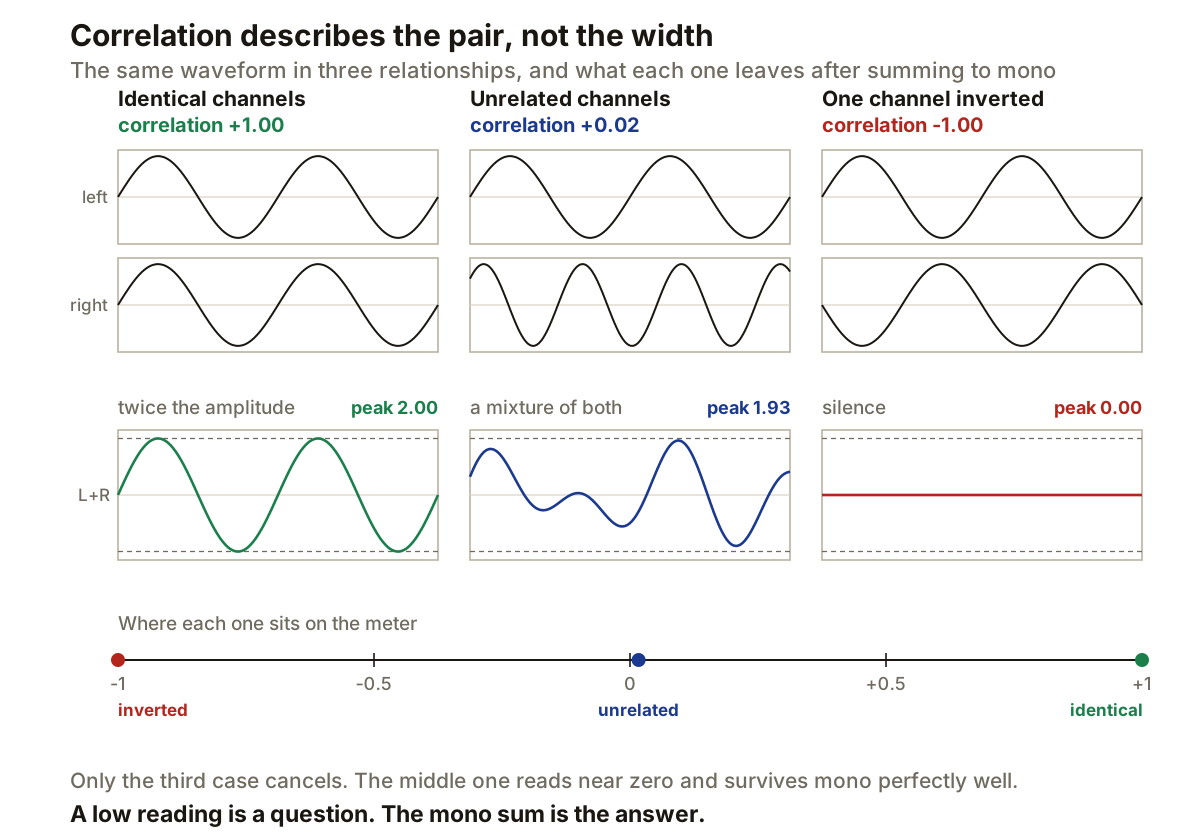
A correlation meter does not measure width. It measures how similar the left and right channels are to each other, which is a related question with a different answer, and the gap between the two is where most of the confusion about this meter lives.
The scale runs from +1 through zero to -1. At +1 the channels are identical. At -1 they are identical but with opposite polarity. Everywhere between, the meter is reporting degrees of similarity, not degrees of width.
The two ends are the easy part
Put the same signal at the same level in both channels and the meter reads +1:
L = x
R = x

L + R = 2x
Summing to mono reinforces. The result is twice the amplitude, or 6.02 dB louder, which is the same arithmetic as two correlated sources adding.
Now invert one channel. The magnitudes still match, but every positive sample on one side meets a negative one on the other:
L = x
R = -x

L + R = x + (-x) = 0
The meter reads -1 and the mono sum is silence.
That is the whole reason anyone watches this meter. Mono playback combines left and right, so material built on opposite-polarity relationships can lose level or disappear when the two are added.
Zero is not half-broken
The middle of the scale is where the meter gets misread, because zero looks like a failing grade and is not.
A reading near zero means the channels have little consistent relationship over the meter’s measurement window. It does not mean cancellation. In the diagram above, the unrelated pair reads +0.02 and its mono sum still peaks at 1.93, barely below the identical case. Nothing is lost.
Stereo recordings contain material that differs between left and right. That difference is what makes them stereo. iZotope notes that most recordings sit somewhere between zero and +1, and that a brief excursion below zero is not necessarily a problem, though it can point to a mono-compatibility issue worth checking.
The meter has no idea what is musically important. A short reverb tail can drag the reading down without harming anything. A lead vocal that vanishes in mono is a serious problem even while the average reading looks respectable. The number describes a relationship; it does not rank the material.
Mid and side make the cancellation visible
The same stereo signal can be written as sum and difference instead of left and right:
Mid  = L + R
Side = L - R
Run the two extreme cases through that and the mechanism stops being abstract. For identical channels, where L = x and R = x:
Mid  = x + x = 2x
Side = x - x = 0
No difference information at all. The signal is mono, and everything lives in the middle.
For the inverted pair, where L = x and R = -x:
Mid  = x + (-x) = 0
Side = x - (-x) = 2x
Everything lives in the difference and nothing survives the sum. That is the same condition as the -1 reading, seen from the other side.
Why widening moves the reading
This also explains what a width control is doing to the meter. Ableton’s Utility documentation puts 0 percent Width at mono and values above 100 percent at a wider panorama; in Mid/Side mode the control moves from Mid toward Side.
As side information grows relative to mid, left and right become less alike, so correlation falls. iZotope makes the same point directly: greater widening tends to move the reading toward the lower half of the meter.
That is worth stating plainly, because it means a falling correlation reading after widening is the expected result, not evidence of damage. It only becomes a fault when something you need stops surviving the mono sum.
What the meter cannot tell you
A single number covers the whole spectrum at once. Low frequencies can be strongly correlated while a widened top end sits negative, and the meter averages the two into one reading that describes neither.
That is why a bad reading rarely tells you what to fix. It tells you to go and look. A vectorscope adds one more view of the same relationship: iZotope describes a vertical Lissajous pattern as similar channels, approaching a vertical line for mono, with more horizontal patterns indicating greater difference and possible mono-compatibility problems.
Treat both displays as diagnostics rather than targets. A mix does not want to sit at +1, because that would mean left and right were identical and there was no stereo information at all.
The order that actually works
Watch the meter to find moments worth investigating, then switch to mono to find out whether they matter.
If the reading drops while a widened part is playing, solo that part and sum it. If its level collapses, reduce the widening or change how it is being produced. If it survives, the negative excursion was describing intentional stereo information and needs no repair.
Correlation tells you about the relationship. Mono tells you the consequence. Only the second one decides whether there is a problem.
Producer’s note
After widening anything, compare three numbers rather than one: the correlation reading, the part’s level in stereo, and its level in mono.
A falling correlation figure on its own is not a fault, and chasing it back toward +1 will undo the width you just created. The pair that matters is stereo level against mono level. If those two are close, the reading can sit wherever it likes.
If they are not close, you have found something real, and you found it because the meter told you where to listen.