Leapwing CenterOne 3 adds multiband control and a sidechain to the phantom centre
Turn up the Mid channel on a finished stereo mix and the vocal comes forward. So does a good part of everything else.
That is because Mid is the sum of left and right. A guitar panned partly left is louder on one side but still present on both, so a share of it lands in Mid along with the vocal. Only a source panned hard to one side stays out entirely. Mid/side processing is precise about what it does, but what it does is not the same as isolating the centre you hear.
Leapwing’s position is that the phantom centre, the image that sits between the speakers, is a different thing from Mid, and its Center Prominence algorithm is built to identify the first rather than the second. That is the developer’s claim about its own method, and it is the reason CenterOne exists.
What version 3 adds
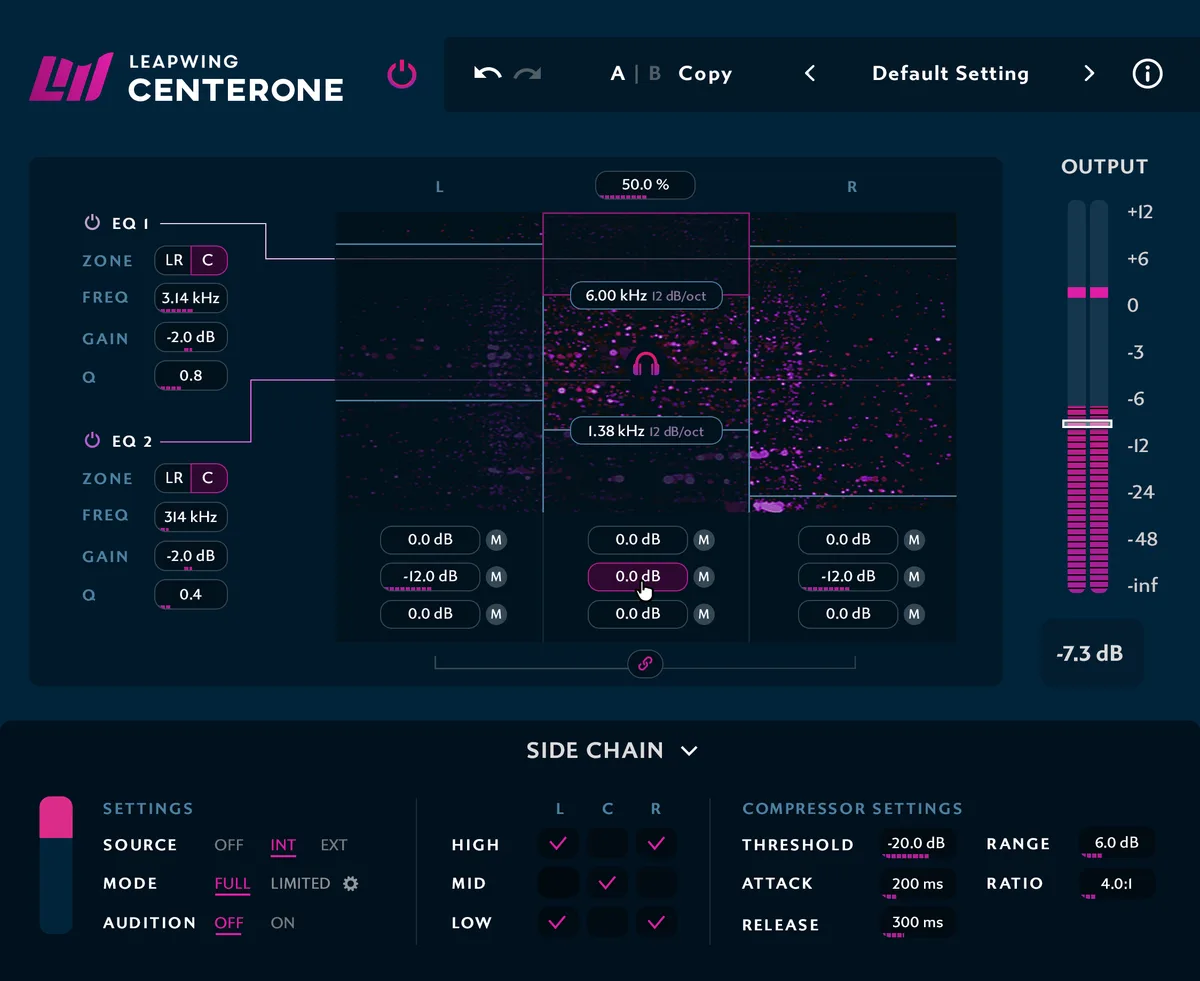
The extraction is now multiband: three bands with adjustable crossovers, so the centre can be raised in the low mids and left alone in the top end. EQ can be assigned to the centre component or to the left and right components separately.
The larger addition is a sidechain, internal or external, with a matrix that sets which band and which channel it acts on. With a vocal on the sidechain input, you could duck only the centre of the band where the vocal lives and leave the sides untouched. In hosts that support them, CenterOne 3 also offers left, centre and right auxiliary outputs.
Price and formats
€174 until 22 October, then €249. The CenterOne 3 manual lists AAX, VST3 and AU on macOS, and AAX and VST3 on Windows. There is no VST2.
Producer’s note
Before reaching for centre extraction on a mastering job, solo the side channel. If the vocal is audible there, it was recorded or processed with some width, and no centre tool will move all of it. That tells you how much to expect before you start.
Read more at Leapwing Audiohttps://www.leapwingaudio.com/product/centerone3/
Buy atPlugin Boutique