AudioScape's Rev Blue 76A rebuilds the noisy 1176, on purpose
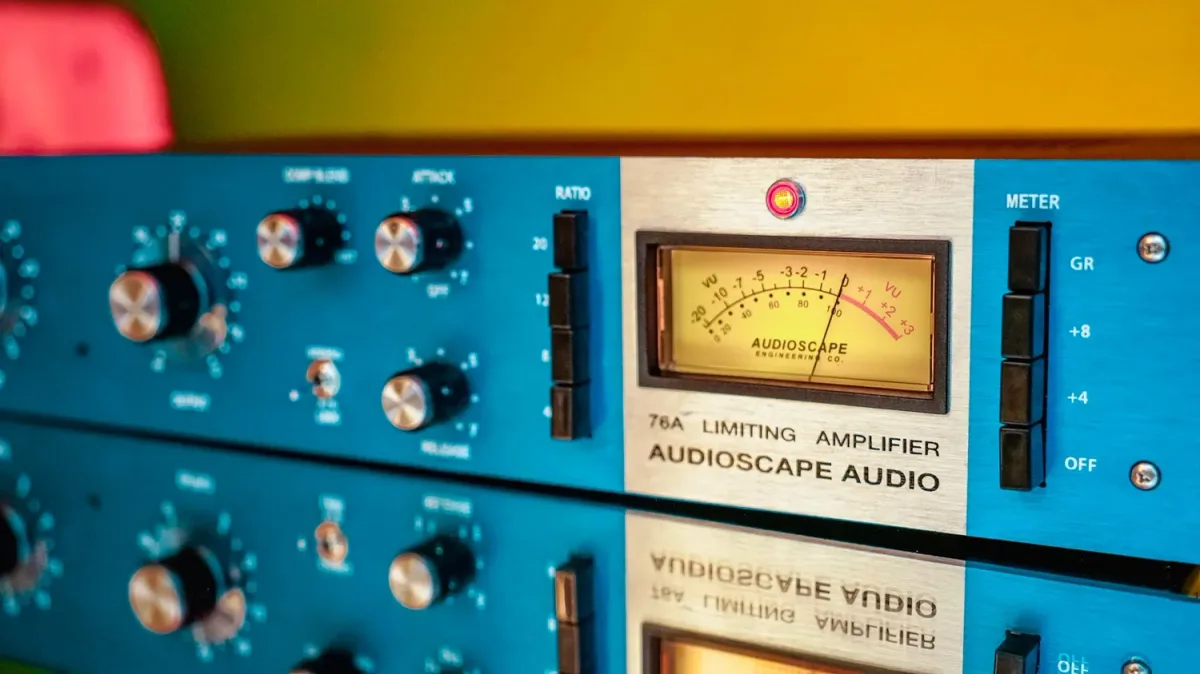
AudioScape have announced the Rev Blue 76A, a limited run of twenty units built on the Revision A circuit of the 1176. The name is a joke about the panel, which is anodised in reversed colours rather than the original blue on silver.
The interesting part is underneath, and it is the opposite of what a manufacturer usually advertises. This is a deliberate reconstruction of the version everyone spent the 1970s trying to fix.
What Revision A actually is
Bill Putnam’s 1176 arrived in 1967, and the first twenty five units, serial numbers 101 to 125, are what collectors call Revision A. Rev AB and Rev B followed within months, still with the blue stripe on the panel.
Then in January 1970 came Revision C, and with it the low-noise circuit that renamed the product 1176LN and turned the faceplate black. Revisions C, D and E are the ones generally held up as the definitive article.
Rev A is the one before the fix. It has no low-noise circuitry, which means a higher noise floor and more harmonic distortion, and those are not two separate facts. They are the same absence described twice. The blue stripe units have their reputation for grit precisely because nothing had yet been added to clean them up.
Twenty five originals, and AudioScape are making twenty of these.
The noise is the manufacturing problem
AudioScape are unusually direct about what building this costs them. Rev A has been their most expensive 76 to produce, because the noise specification pass rate on those boards is far lower than on their Rev D and Rev F units.
That follows from the parts. Carbon composition resistors are noisy by nature, which is part of why the industry moved away from them, and they say boards using these components cannot be assembled with modern mass-manufacturing techniques. Every unit is built by hand from a stockpile of vintage components they have been accumulating for years.
So the economics are inverted. The circuit is more expensive to build because it is worse by any measurement you would put on a datasheet, and more boards get thrown away for failing a specification the design was never going to pass. That is what fidelity to a 1967 design actually costs.
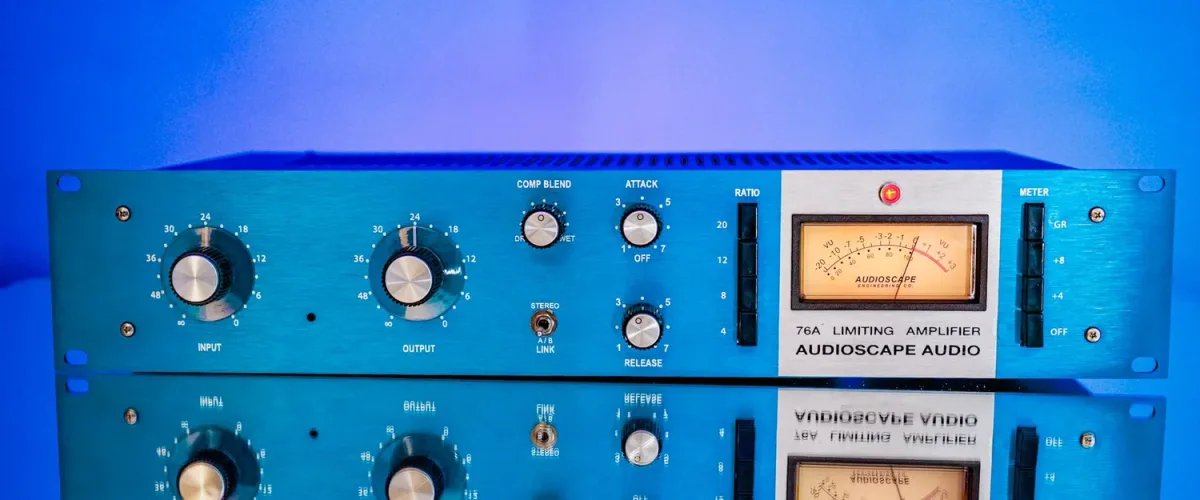
What has been added, and where
Two features come across from AudioScape’s Deluxe Edition: a dry/wet blend on the front panel, and a switchable stereo link.
The blend is parallel compression built into the box, which on this circuit is more useful than it sounds. A Rev A pushed hard is doing as much saturation as compression, and a blend control lets you keep the distortion while giving back the transients it flattened.
The placement matters more than the feature. Both additions sit on a separate PCB, so the late-sixties circuit is untouched and the new controls only add the option of running it in parallel or linked. That is the right way round: the thing people are paying for is the original topology, and bolting modern conveniences into it would defeat the exercise.
The input transformer is Cinemag’s CM-O12, their replica of the UTC O-12 in the originals, with a custom-wound Cinemag on the output. NOS FETs sit in the compressor and amplifier sections, alongside Allen-Bradley carbon comp resistors, Cornell Dubilier polypropylene and Mallory capacitors.
The two switches worth knowing
The ratio buttons are the original push-button type at 4:1, 8:1, 12:1 and 20:1, and they can be pushed in combination. All four at once is the famous all-buttons-in mode, which was never a designed setting: the ratio becomes ill-defined, the attack lags, and the whole thing distorts. It is the reason a lot of people own an 1176 at all.
The attack control also switches off entirely, which bypasses compression and leaves the unit as a line amp. With +55 dB of output gain available and no low-noise circuit in the way, that is a saturation stage rather than a clean gain stage, and on this revision it is arguably the point.
Price and the wait
1,099 dollars, which is where a euro price near 950 comes from if the shop converts for you. Twenty units total and three showing as available.
The lead times are the part to read twice: roughly 6 to 10 weeks for production, then a further 6 to 8 weeks for shipping, with founder Chris Yetter noting there are still 76 orders outstanding from last month that come first. This is not a thing you buy for a session next month.
Read more at AudioScapehttps://www.audio-scape.com/deals/76a-blue