UAD 11.9 brings Black Box HG-2 and elysia karacter to Apollo DSP
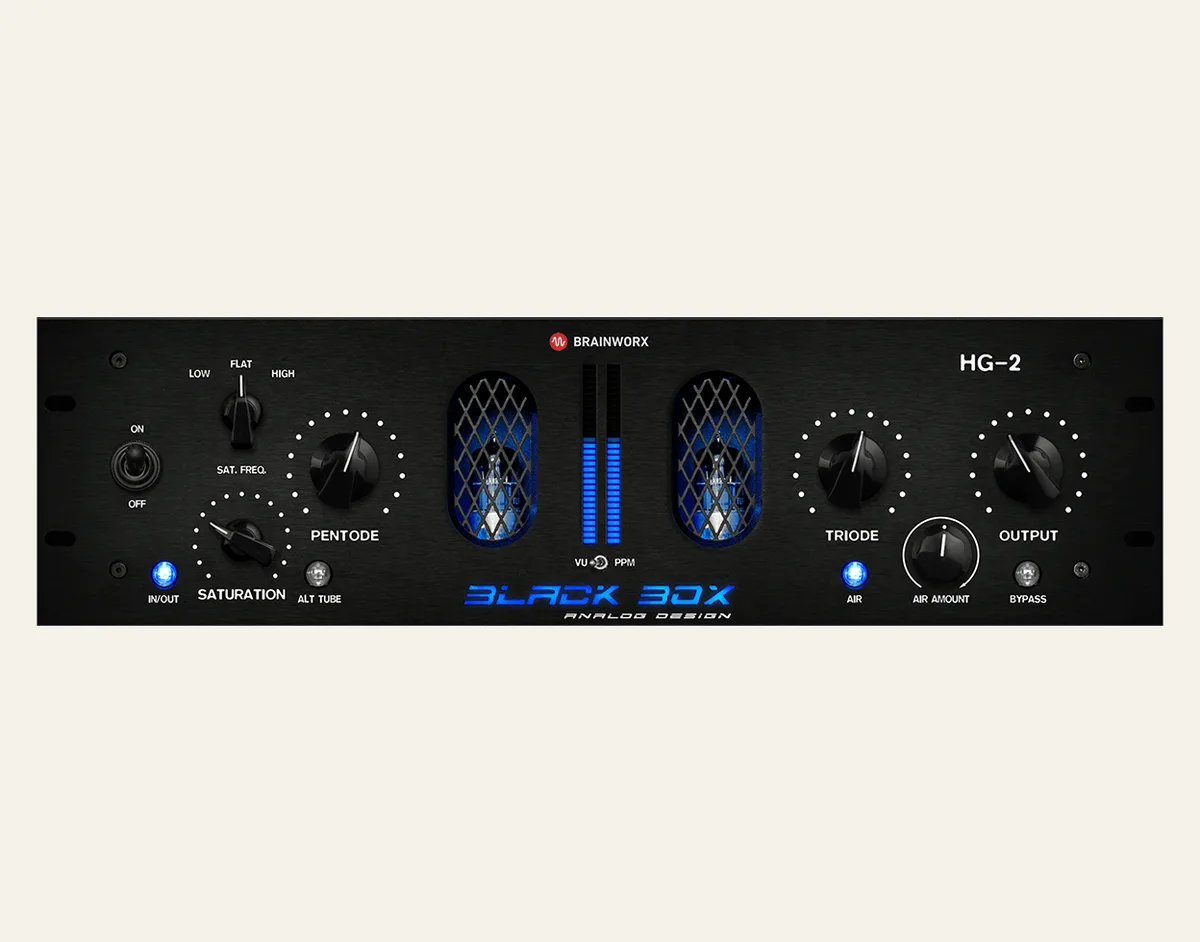
Universal Audio’s UAD 11.9 software adds DSP versions of the Black Box Analog Design HG-2 and elysia karacter for Apollo interfaces and UAD-2 accelerators.
These are new to the UAD DSP platform rather than completely new plugin designs. Both were developed by Brainworx, but the UAD versions can now run on Apollo hardware while recording or mixing without loading the computer’s processor.
The HG-2 models separate Pentode and Triode tube stages. Pentode supplies smoother even-order harmonics, while Triode introduces a harder third-order character. A parallel saturation path can target the low end, high end, or full signal, with additional Density, Air, Calibration, gain, and mix controls not found on the original hardware.
Elysia karacter provides three distortion modes. Saturation is intended for controlled harmonic density, FET Shred introduces asymmetrical distortion, and Turbo Boost moves into hard clipping. Mid/Side processing can keep the centre and sides under separate control, while an unlinked mode allows different settings for the left and right channels.
UAD 11.9 also gives the EMT 140 and EMT 250 reverbs new high-resolution interfaces on Mac. Windows receives Apollo Thunderbolt driver improvements, faster launching for UAD Meter and Control Panel, and updated SoundID Reference compatibility.
Both new plugins require an Apollo interface, UAD-2 Satellite, or UAD-2 PCIe card. Universal Audio offers 14-day demos through the installed UAD software.
Producer’s note
Level-match the processed and bypassed signals before judging either saturator. Both can raise perceived loudness without an obvious peak increase, which makes louder settings easy to mistake for better ones.
Read more athttps://help.uaudio.com/hc/en-us/articles/215270403-UAD-Version-History-Release-Notes