UA's new Volt range sells onboard compression and extra I/O at the same $299
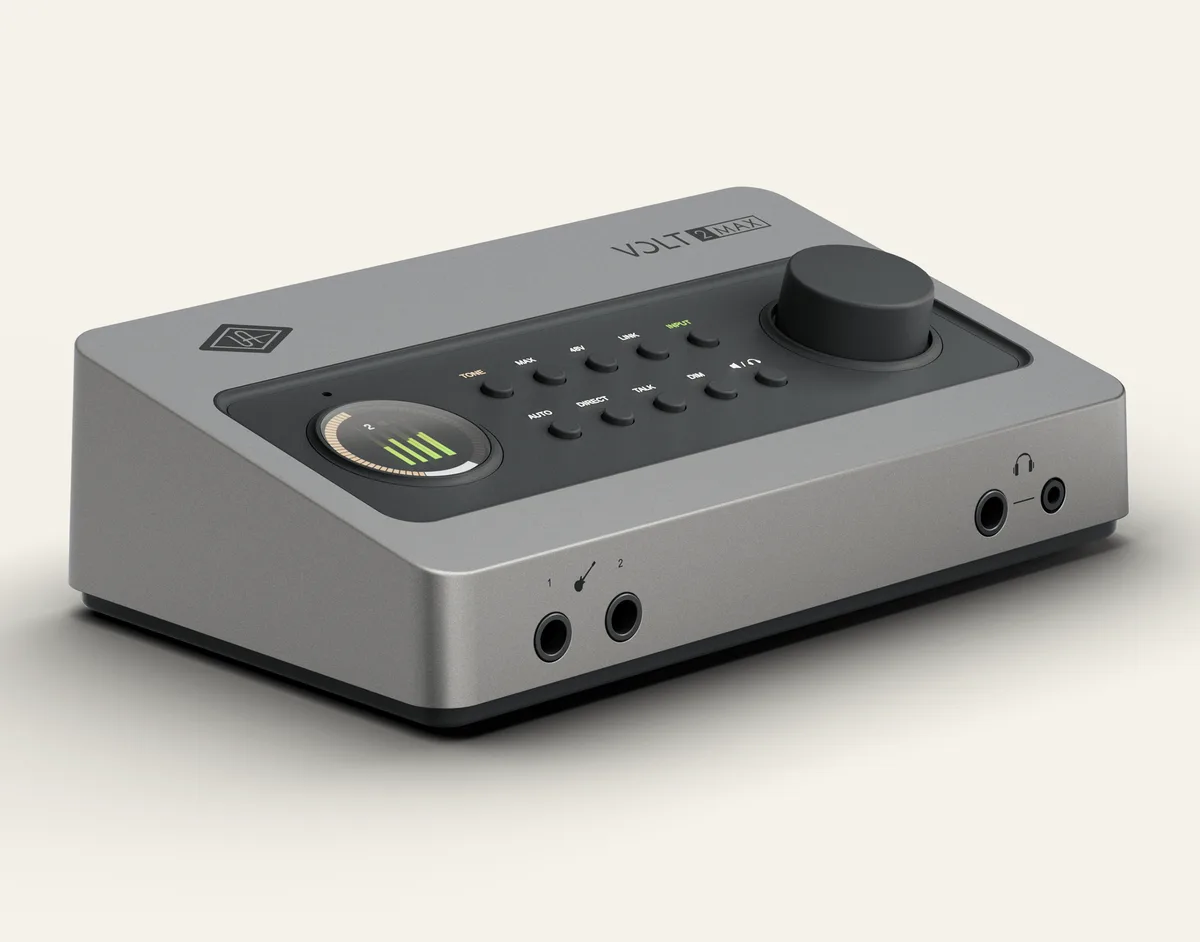
Universal Audio replaced its Volt interfaces on 1 October with six bus-powered USB models, on sale from retailers the same day. Three are Volt Gen 2 and three are a new Volt Max line.
The US prices, from UA’s own comparison table:
- Volt 1 Gen 2: $149, 2 in and 2 out, one preamp
- Volt 2 Gen 2: $219, 2 in and 4 out, two preamps
- Volt 4 Gen 2: $299, 12 in and 6 out, two preamps, line I/O, ADAT in, MIDI
- Volt 2 Max: $299, 10 in and 4 out, two preamps, Max compression, ADAT in, MIDI, talkback
- Volt 4 Max: $399, 12 in and 6 out, adds line I/O and speaker switching
- Volt 4P Max: $499, 12 in and 6 out, four preamps
The two at $299
Volt 4 Gen 2 and Volt 2 Max cost the same and share most of a spec: two preamps, ADAT optical input for up to eight more channels, and MIDI in and out. The difference is what each spends the money on. Volt 4 Gen 2 adds line inputs and outputs. Volt 2 Max drops those and adds onboard compression and a built-in talkback mic.
Max Processing is six one-touch presets that UA says are derived from its 1176, LA-2A and VCA compressor emulations, running in real time with no added latency. They combine with the preamp modes for what UA counts as more than 18 combinations per channel.
What every model shares
32-bit, 192 kHz conversion and Tone Shaping Preamps with three switchable modes: Warmth (Tube), Focus (Solid State) and Shine (British Class-A). All models except Volt 1 Gen 2 add a colour Smart Display with gain-reduction metering, plus Auto-Gain with Clip Protection, which sets the input level and detects whether a mic, line or instrument is plugged in.
They are class compliant on Mac, Windows, iPad and iPhone, with an ASIO driver for Windows. The bundle includes 15 UAD plug-ins, the LUNA DAW, Melodyne Essential and three months of FL Studio Producer Edition.
Producer’s note
UA’s Volt 2 Max page is clear that recording through Max Processing commits the compression at the source, so it is printed into the take rather than applied only to what you hear. On a take you cannot repeat, pick the gentlest preset that does the job, because there is no undo on compression that went in at the input. Heavier settings are safer on parts you can simply record again.
Read more at Universal Audiohttps://www.uaudio.com/blogs/press/universal-audio-announces-new-volt-and-volt-max-audio-interfaces