MiniFreak V 5.0 takes your samples and converts them to 12-bit
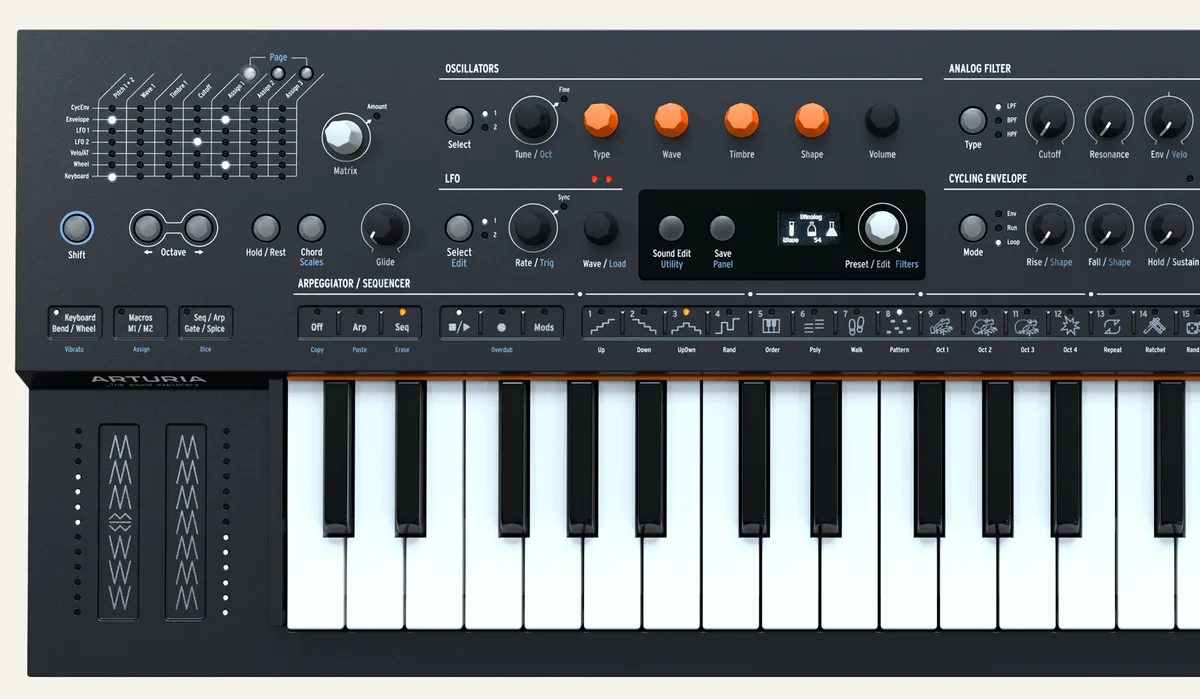
MiniFreak V is the plug-in version of Arturia’s MiniFreak hardware synth, and version 5.0 arrived on both at once: the plug-in as 5.0.0.6875 for macOS 11 and Windows 10 or later, the synth as firmware 5.0.0, both on 15 September. It is a free update, and it opens up the one thing the instrument previously kept closed: you can now import your own samples and wavetables.
The specification is the interesting part.
12-bit, 32 kHz, six seconds
Samples go in as WAV, AIFF or FLAC. Arturia converts them to 12-bit at 32 kHz, with a maximum length of six seconds, and handles that conversion itself so nothing needs preparing first.
Those are not arbitrary numbers, and they are not a limitation that got left in. They are what the MiniFreak hardware runs. Arturia has chosen to make the plug-in behave like the box rather than let the software version quietly do more, which is why the same import works in both places.
The practical effect is that an imported sample is not a playback file. It is material for the sample-based engines, granular included, which is a different job from triggering a recording.
Wavetables are a separate path with their own format: mono, 24-bit, 512 points. Arturia specifically mentions importing from other libraries including its own Pigments.
What comes with it
A Factory Bank v5.0 with 23 new presets built around the new sample and wavetable content, which is the usual and sensible way of showing what the format can actually do.
Producer’s note
Six seconds is the whole budget, and it is spent from the moment the file starts. Trim the silence and the tail before importing rather than after, because the limit applies to the file you hand over, not to the part of it you intended to use.
And if a sample sounds different in MiniFreak than it did in your editor, that is the 12-bit, 32 kHz conversion rather than anything going wrong. Anything above 16 kHz is gone, and material with a lot of quiet detail loses more to the bit depth than material that sits near full scale.
Read more at Arturiahttps://www.arturia.com/products/hardware-synths/minifreak/update
Buy atPlugin Boutique