FL Studio 2026 rebuilds FLEX and lets Gopher edit your session
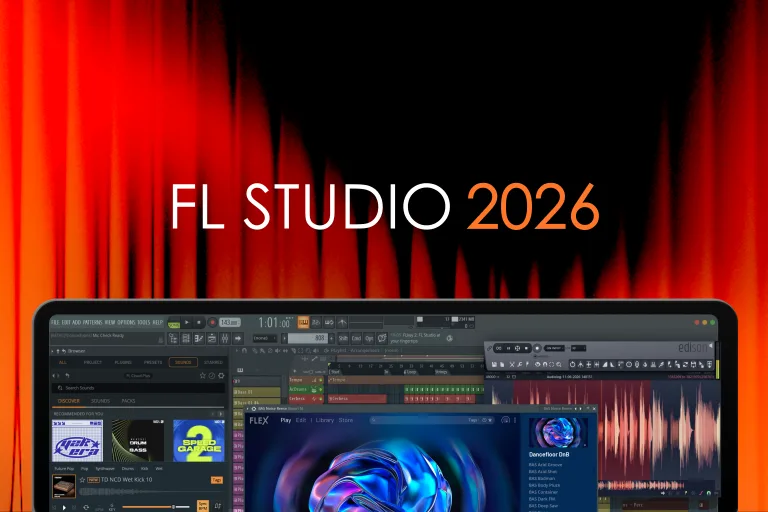
Image-Line released FL Studio 2026 on July 7 and followed it with version 2026.1.2 on July 20. The main changes are a rebuilt FLEX instrument, cloud project backup, new session controls for Gopher, and two useful audio tools called Transmitter and Audio Logger.
Gopher can now make changes after a typed request. It can organize tracks, adjust levels, route audio, add effects, and generate Piano Roll or VFX scripts. This is not an automatic mixing system running in the background: you tell it what to change, and it carries out that specific task. Image-Line says project data is not collected or used for model training.
FLEX has been rebuilt with a lighter engine and a new browser. Every FL Studio user gets more than 200 presets across eight Core Series packs. The important part is not the preset count but loading speed and CPU use; FLEX is intended to remain usable in larger projects instead of becoming the instrument that gets frozen first.
Transmitter separates a signal into transient and sustain components, then allows each part to be routed to a different Mixer track. That opens up more detailed processing than a standard transient shaper: the hit can feed compression or distortion while the tail goes through reverb, widening, or separate EQ. Transmitter is limited to the All Plugins Edition.
Audio Logger continuously retains the last 60 seconds of the Master output, providing a way to recover an unrecorded performance. FL Cloud backup is also built into the DAW, with 500 MB included for free, 5 GB on Plus, and 1 TB on Pro.
FL Studio 2026 is a free update for existing owners through Image-Line’s Lifetime Free Updates policy.
Producer’s note
Audio Logger captures the Master output, not the separate mixer channels. Recover the idea immediately, then recreate or record the individual parts if you need control over the mix.
Read more athttps://www.image-line.com/fl-studio/release/2026